
Introduction
On a large construction project, hauling rarely attracts as much attention as excavation, lifting, or paving. Yet when trucks cannot keep pace with the rest of the site, productivity drops almost immediately.
An excavator can have plenty of digging capacity, but that capacity means little when loaded trucks are still waiting to leave the work zone. A loader can fill a truck quickly, but the advantage disappears if the return cycle is too slow. The same problem appears at the opposite end of the route when trucks arrive faster than the unloading area can accept them.
This is why construction hauling should be viewed as part of the production system rather than a separate transportation activity.
For contractors evaluating heavy-duty trucks, the important question is not simply, “How much can this truck carry?” A more useful question is, “Can this truck maintain the hauling rhythm required by this particular project?”
That distinction has a major influence on equipment selection.
Construction Hauling Starts with the Work Cycle
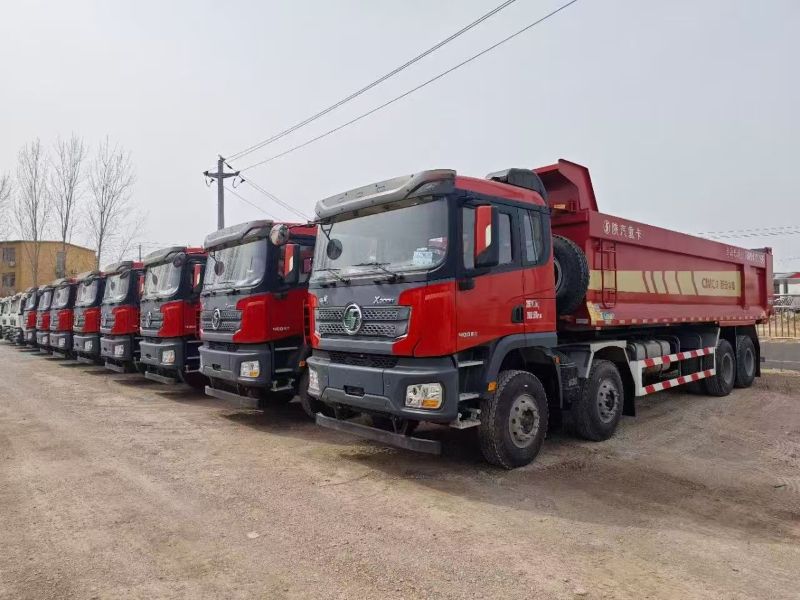
Every hauling operation has a cycle, but no two construction projects have exactly the same cycle.
A Truck Spends More Time Than You Think Outside the Hauling Phase
Travel is only one part of the process. The truck must enter the loading area, position itself correctly, receive material, leave safely, travel to the discharge point, position again, unload, and return.
The efficiency of construction hauling therefore depends on the complete cycle rather than travel speed alone.
A truck that completes the transport section quickly but spends excessive time positioning or unloading may contribute less daily output than a slightly slower vehicle that moves smoothly through every stage.
Cycle Time Should Be Evaluated Together with Production Demand
Suppose an excavator can load trucks faster than the fleet can return. Eventually, the excavator has to wait.
Increasing excavator productivity will not solve the problem because the constraint is transportation capacity.
The reverse can also happen. Too many trucks may queue around a loading machine, creating congestion without increasing actual production.
Professional fleet planning tries to balance these activities rather than maximize one machine independently.
Why the Loading Machine Changes the Truck Requirement
Truck selection should never happen without considering the excavator or wheel loader working beside it.
Excavator and Truck Matching Affects Loading Efficiency
If a truck body is poorly matched to the loading machine, the operator may need additional passes to distribute material correctly. Loading time increases, and uneven material placement can affect axle loading.
A suitable pairing allows the excavator to fill the body efficiently without excessive repositioning.
The objective is not necessarily to minimize the number of bucket passes at all costs. Bucket capacity, material density, truck body dimensions, and allowable payload need to work together.
Loader-Based Operations Create Different Requirements
Quarry stockpiles and aggregate yards frequently rely on wheel loaders rather than excavators.
The loading pattern changes because the truck may need to maneuver repeatedly around a relatively confined loading area. Turning geometry, cab visibility, body dimensions, and site traffic management become increasingly important.
This illustrates why construction hauling equipment cannot be selected purely from an isolated specification sheet.
Material Behavior Changes the Hauling Problem
A truck body does not experience sand, wet soil, broken rock, and demolition material in the same way.
Dense Materials Put More Stress on the Vehicle
With crushed stone or dense excavation material, the body may reach its practical weight limit before it reaches its volumetric capacity.
This places greater demand on the chassis, suspension, axles, tires, and brakes.
A larger body does not automatically improve construction hauling productivity if the transported material is sufficiently dense that the additional volume cannot be used safely.
Wet and Sticky Material Changes the Unloading Cycle
Wet clay and moisture-heavy soil create a different problem.
Material may adhere to the body instead of flowing cleanly during tipping. The hydraulic system then works through a longer cycle, and the operator may need additional time before the body is clear.
Over hundreds of daily movements, small unloading delays become significant.
Abrasive Material Changes Body Durability Requirements
Quarry rock and crushed aggregates repeatedly strike the floor and sidewalls during loading.
In this application, body durability becomes part of transport efficiency. Excessive wear eventually affects maintenance availability and the consistency of the fleet.
Haul Roads Are Part of the Equipment System
One of the easiest mistakes in construction hauling planning is treating the road as a fixed background condition.
It is not.
The haul road interacts continuously with the truck.
Rolling Resistance Changes Real Performance
Loose material, rutting, soft ground, and poor compaction increase rolling resistance. The engine and drivetrain must then produce more effort simply to maintain movement.
The result may be slower loaded travel, increased fuel consumption, additional tire stress, and higher drivetrain temperatures.
This is why two identical trucks can produce very different results on different projects.
Gradient Changes Powertrain and Braking Demand
A steep loaded climb emphasizes low-speed torque and transmission matching. A long downhill section shifts the engineering problem toward braking and thermal management.
Therefore, a route cannot be described simply as “rough” or “good.” Its gradients, surface condition, turning geometry, drainage, and traffic pattern all influence truck selection.
How Truck Configuration Changes Construction Hauling Performance
Once the working cycle is understood, the truck can be evaluated as an integrated mechanical system.
Engine Torque Must Match the Working Resistance
For construction hauling, peak horsepower is only part of the picture.
A loaded truck leaving an excavation area may need substantial pulling force at relatively low vehicle speed. Strong low-speed torque helps the vehicle accelerate under load without relying excessively on high engine speed.
The correct engine specification therefore depends on payload, gradient, surface resistance, and operating cycle.
Transmission Matching Determines How Effectively Power Reaches the Ground
Engine output becomes useful only when the transmission can keep the powertrain operating within an effective range.
Poor gear matching can result in unnecessary shifting, loss of momentum on grades, and increased mechanical stress.
A well-matched transmission allows the truck to maintain controlled power delivery as resistance changes.
Axle Configuration Influences More Than Payload
Axles determine how vehicle weight is distributed and how effectively drive force reaches the ground.
A configuration suitable for relatively stable construction roads may not provide the same traction on loose or muddy access routes.
Axle selection also interacts with turning requirements, tire loading, braking behavior, and regional road regulations.
A Practical Engineering View of Truck Selection
Instead of comparing trucks by a single number, contractors can examine how the major systems respond to the project.
| Project Characteristic | Engineering Effect | Truck System Most Affected |
|---|---|---|
| Dense excavation material | Higher load stress | Chassis, axles and suspension |
| Steep loaded haul route | Higher tractive demand | Engine and transmission |
| Rough temporary road | Repeated shock loading | Suspension, tires and frame |
| Frequent dumping cycles | Repeated hydraulic demand | Cylinder, pump and body |
| Long downhill sections | Increased thermal braking load | Brake and auxiliary braking systems |
| Restricted loading zone | More positioning and turning | Steering, visibility and wheelbase |
This approach gives a much more realistic picture of construction hauling performance than simply comparing body volume or engine output.
Why Hydraulic Performance Matters to Daily Output
The dump body is effectively part of the production process.
Lifting Speed Is Only One Part of Hydraulic Performance
Fast lifting may appear attractive, but controlled movement is equally important.
The hydraulic system needs to develop sufficient force under load while maintaining predictable body movement. Hoses, cylinders, seals, valves, and mounting structures all operate under repeated pressure cycles.
For high-frequency construction hauling, consistency matters more than an impressive single dumping cycle.
Dumping Ground Conditions Cannot Be Ignored
Tipping a loaded body raises the vehicle’s center of gravity considerably.
Uneven or soft ground can therefore turn an otherwise routine unloading operation into a stability risk.
Professional site management combines suitable truck design with a properly prepared unloading area rather than relying on the truck to compensate for poor ground conditions.
Braking Performance Must Be Evaluated Under Working Load
An empty truck returning from the unloading point behaves very differently from the same truck traveling fully loaded.
Payload Changes Stopping Behavior
Higher vehicle mass increases the energy that must be controlled during braking.
On downhill routes, repeated braking can also introduce thermal stress. The brake system therefore needs to be considered in relation to the actual route rather than only its basic specification.
Operator Technique Still Matters
Even a well-designed braking system can be used inefficiently.
Drivers who understand the route can anticipate gradients, maintain more stable speeds, and avoid unnecessary aggressive braking. This reduces component stress while improving control.
Construction hauling performance is therefore partly mechanical and partly operational.
Maintenance Availability Is a Production Metric
Maintenance is sometimes discussed separately from productivity, but on an active construction site the two are inseparable.
A truck undergoing an unexpected repair is no longer part of the hauling cycle.
Preventive Inspection Protects Fleet Rhythm
Early detection of hydraulic leakage, abnormal tire wear, suspension movement, cooling problems, or braking deterioration gives maintenance teams an opportunity to intervene before the truck stops working.
The value is not simply preventing a repair. It is preserving predictable fleet availability.
Standardization Can Simplify Fleet Management
When multiple trucks share compatible components and maintenance procedures, spare-parts planning and technician training can become easier.
For projects operating several hauling units, this can have a meaningful effect on fleet availability over the full construction period.
Where Haiyu Fits into Construction Hauling
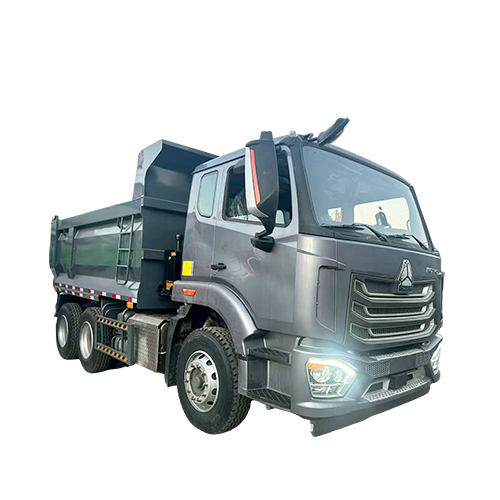
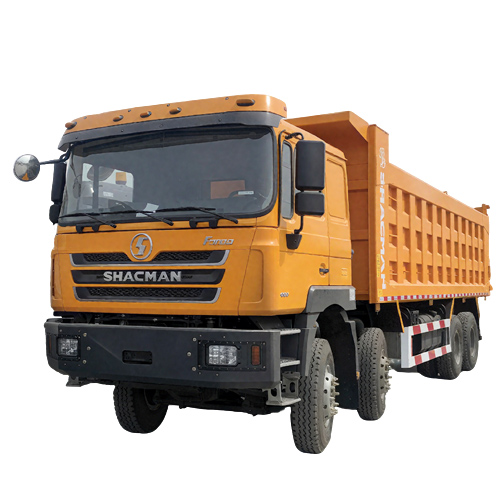
For Haiyu, construction hauling provides a stronger positioning opportunity than simply presenting individual trucks as collections of specifications.
Haiyu can connect its heavy-duty vehicle offering with the engineering problems contractors actually need to solve: maintaining material flow, matching vehicles to site conditions, supporting repeated loading cycles, and reducing interruptions during long projects.
Haiyu Heavy-Duty Trucks for Material Movement
Applications can range from earthmoving and aggregate transportation to road construction and large site development.
The appropriate configuration depends on the working environment. A truck used primarily on prepared construction roads may require a different powertrain, suspension, and axle arrangement from one expected to operate continuously between a quarry face and a temporary haul road.
Custom Configuration Has Practical Engineering Value
Haiyu’s custom-built vehicle capability is particularly relevant when standard configurations do not align with project requirements.
Customization should not mean adding equipment without purpose. It should begin with the material being transported, expected working load, route condition, unloading method, and local operating requirements.
That makes customization an engineering decision rather than a cosmetic option.
What Contractors Should Ultimately Measure
A truck specification sheet can tell you rated power, body dimensions, axle arrangement, and other useful information. It cannot tell you exactly how many productive cycles that vehicle will complete on your site.
That requires understanding the operation.
The most useful performance question is therefore not whether one truck has a larger specification than another. It is whether the selected fleet can keep the loading equipment productive, move the required material volume, unload consistently, return reliably, and repeat the process throughout the working day.
That is the real measure of construction hauling efficiency.
Conclusion
Construction hauling is an engineering workflow built around the interaction between trucks, loading equipment, material characteristics, haul roads, unloading areas, operators, and maintenance teams.
Choosing the right truck therefore requires more than comparing payload and horsepower. Engine torque must suit route resistance, the transmission must deliver that torque effectively, the chassis and suspension must tolerate repeated loading, the hydraulic system must support reliable unloading, and the brakes must control the vehicle safely under working load.
For Haiyu, this creates an opportunity to position heavy-duty trucks and custom-built vehicles around actual project requirements rather than generic product claims.
When the vehicle configuration matches the construction cycle, hauling stops being a bottleneck and becomes a predictable part of project productivity.
FAQ
What is construction hauling?
Construction hauling is the movement of soil, aggregates, rock, road base, construction waste, and other project materials between loading, processing, storage, and placement areas.
How should a truck be selected for construction hauling?
What is construction hauling?
Construction hauling is the movement of soil, aggregates, rock, road base, construction waste, and other project materials between loading, processing, storage, and placement areas.
Why is engine torque important in construction hauling?
Loaded trucks frequently operate at relatively low speeds and encounter slopes or high rolling resistance. Strong usable torque helps maintain controlled movement under these conditions.
How does haul road quality affect truck productivity?
Poor surfaces increase rolling resistance, vibration, tire stress, and travel time. This can reduce cycle productivity even when truck specifications remain unchanged.
Can Haiyu provide trucks for different construction applications?
Haiyu’s heavy-duty and custom-built vehicle range can support different construction hauling requirements, with the final configuration selected according to the project’s operating conditions.