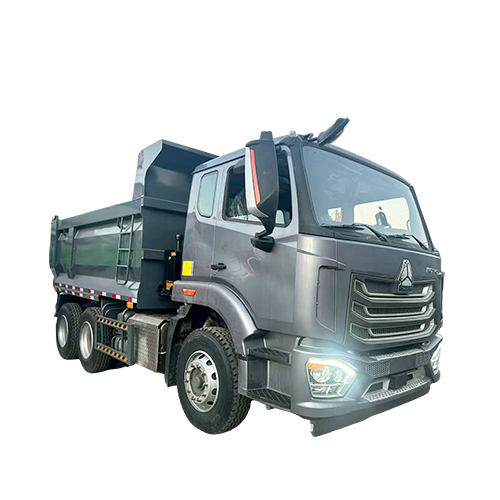
A battery swapping electric dump truck is becoming a serious option for construction fleets that need lower tailpipe emissions without accepting long charging downtime. Instead of waiting for a large battery pack to recharge, the vehicle is designed around replaceable battery modules and a dedicated swap process. For contractors, mining support teams, and municipal material hauling fleets, the question is not whether the idea sounds modern. The real question is whether the duty cycle, site layout, route distance, payload, and energy plan make the battery swapping electric dump truck practical.
Haiyu’s HOWO TX7 battery swapping electric dump truck gives buyers a product-specific starting point for this discussion. This guide explains how to evaluate the battery swapping electric dump truck as a working asset, not as a showpiece. It keeps the focus on fleet uptime, hauling conditions, operational planning, and buyer-side due diligence.
Why Battery Swapping Matters for Heavy Hauling
Heavy-duty hauling is time-sensitive. A diesel dump truck can refuel quickly, while a conventional electric truck may need a longer charging window depending on charger power and battery size. A battery swapping electric dump truck tries to solve that bottleneck by separating energy replenishment from battery charging time. The depleted battery can be removed and charged off the vehicle while another pack is installed.
This model is most attractive when trucks return to a controlled site, run repeated routes, and cannot afford long idle periods. Public resources from the U.S. Department of Energy’s Alternative Fuels Data Center note that fleet EVs can use facility charging during idle time; swapping adds another layer for fleets that need faster vehicle turnaround. A battery swapping electric dump truck therefore belongs in a broader energy strategy, not a simple vehicle-only purchase.

Best Applications for This Truck Type
The strongest use cases are predictable. Urban muck hauling, construction material transport, quarry-to-site movement, industrial park hauling, and municipal short-haul work can all fit a battery swapping electric dump truck if the truck returns to a swap-capable base or route hub. These applications often involve repeated cycles, known distances, and high daily utilization.
A battery swapping electric dump truck is less suitable when routes are highly random, charging or swapping support is unavailable, or trucks must travel long distances far from controlled infrastructure. Buyers should start with route mapping before choosing the truck. If the fleet cannot define its daily distance, loading time, unloading time, and return points, it is too early to finalize the specification.
How Swapping Compares With Depot Charging
Depot charging works well for trucks with long parking windows, such as vehicles that return overnight. Battery swapping is different. It is designed to reduce vehicle downtime during the workday, but it requires swap equipment, spare batteries, safety procedures, and energy management. The battery swapping electric dump truck may improve uptime where charging time would otherwise interrupt daily hauling cycles.
Recent IEA analysis in the Global EV Outlook 2026 shows electric trucks gaining share in heavy freight sales, which makes infrastructure planning more important for buyers. The practical lesson is simple: a battery swapping electric dump truck should be evaluated alongside the station, grid connection, battery inventory, and fleet dispatch plan.
Payload, Route, and Energy Planning
A dump truck buyer still needs to think like a hauling operator. Payload, body volume, axle load, road grade, rolling resistance, climate, and stop-start frequency all affect energy use. A battery swapping electric dump truck used on flat urban routes will not behave the same as one working on steep quarry roads.
Procurement teams should prepare a route profile before requesting a quotation. Include average loaded distance, empty return distance, waiting time, daily trips, material density, site speed, road quality, and charging or swapping location. This information helps the supplier discuss whether the battery swapping electric dump truck can meet the target work cycle with an appropriate battery and chassis configuration.
Battery Station Requirements Buyers Should Check
A battery swapping electric dump truck depends on the station as much as the vehicle. Buyers should ask where battery packs will be stored, how they will be charged, how long swaps take under normal operation, how safety checks are handled, and what happens when daily demand exceeds the available battery inventory. Space, power capacity, fire safety, weather protection, and trained operators all matter.
The station should also fit dispatch logic. If trucks arrive in clusters after loading or unloading, the station must handle peak demand. If the site has limited grid capacity, battery charging may need scheduling. The battery swapping electric dump truck can reduce vehicle idle time only when the supporting system is sized realistically.
Chassis, Body, and Driveline Evaluation
A battery swapping electric dump truck should still be judged by truck fundamentals. The chassis must match payload, the dump body must suit the material, the braking system must handle loaded operation, and the driveline must deliver enough torque for site conditions. Battery swapping does not replace correct chassis engineering.
Buyers comparing electric and diesel configurations should review frame strength, suspension, tires, tipping system, battery protection, waterproofing, thermal management, and service access. For fleets that also need tractor options, Haiyu’s HOWO TX7 battery swapping electric tractor truck may be worth reviewing as part of a broader fleet electrification plan.

Comparison Table for Procurement Teams
| Decision Area | Battery Swapping Electric Dump Truck | Conventional Charging Electric Truck | Diesel Dump Truck |
|---|---|---|---|
| Energy turnaround | Fast vehicle return if swap station is ready | Depends on charger power and parking time | Fast refueling where fuel supply exists |
| Infrastructure need | Swap station, spare batteries, charging area | Chargers, grid capacity, parking space | Fuel storage or nearby fuel access |
| Best route profile | Repeated routes with return-to-base operation | Routes with long dwell time | Flexible routes with fuel availability |
| Operational risk | Station sizing and battery inventory | Charging queue and grid limits | Fuel cost and emissions restrictions |
| Buyer focus | Vehicle plus energy system planning | Vehicle plus charger planning | Vehicle service and fuel logistics |
Questions to Ask Before Ordering
Before ordering a battery swapping electric dump truck, ask for details on battery capacity, swap process, battery protection, operating temperature range, chassis payload, dump body volume, axle configuration, warranty terms, spare parts, and service support. Also ask how the truck performs under loaded site conditions rather than only on a flat-road brochure cycle.
The buyer should also ask who will design or support the swap station, how many batteries are recommended per truck, and what operational data is needed for accurate planning. A battery swapping electric dump truck is a smart choice only when the vehicle and infrastructure are planned together. Haiyu can review route, load, and site conditions through the contact page and recommend a suitable configuration.
FAQ
What is a battery swapping electric dump truck?
A battery swapping electric dump truck is an electric dump truck designed so depleted battery packs can be replaced with charged packs, reducing charging-related vehicle downtime.
Who should consider this type of truck?
Fleets with repeated routes, return-to-base operation, high daily utilization, and access to swap infrastructure are the strongest candidates.
Is battery swapping better than fast charging?
It depends on the duty cycle. Swapping can reduce vehicle idle time, while fast charging may be simpler where trucks have enough parking time and charger capacity.
What information should buyers provide to Haiyu?
Send route distance, material type, payload target, daily trip count, road grade, worksite layout, and available power conditions for a practical recommendation.
Can a battery swapping electric dump truck replace diesel immediately?
It can replace diesel in suitable routes, but buyers should confirm payload, infrastructure, battery inventory, service support, and local operating requirements first.