Introduction
In large infrastructure projects, material transportation often decides whether the site runs smoothly or repeatedly falls behind schedule. Excavators, loaders, crushers, batching plants, and paving machines all depend on one thing: a stable flow of materials moving through the project at the right time.
This is why choosing the right construction material hauling equipment is not a simple vehicle selection task. It is a project productivity decision. When trucks are mismatched with site conditions, the result is usually longer cycle times, idle machinery, higher maintenance pressure, and inconsistent material supply.
For contractors working on highways, industrial parks, ports, quarry supply, road base construction, and earthmoving projects, hauling equipment must be evaluated from the perspective of real site performance, not only rated payload.
Why Material Hauling Is a Core Part of Construction Productivity
On most construction sites, material movement connects several work stages together. Excavated soil needs to be removed before grading can continue. Aggregates must arrive steadily before road base preparation can move forward. Asphalt and concrete-related materials often need to be delivered within a controlled working rhythm.
If hauling equipment fails to keep pace, the impact spreads quickly across the project. Loading equipment waits. Operators lose working time. Site teams adjust schedules. In some cases, even well-planned construction workflows are slowed down by inefficient transport cycles.
Professional contractors understand that construction material hauling equipment is not only responsible for moving materials. It supports the continuity of the entire construction process.

Understanding the Real Hauling Cycle
A hauling cycle includes much more than driving from one point to another. In actual site operation, a truck enters the loading zone, waits for loading equipment, receives material, travels through changing road conditions, unloads, and returns for the next cycle.
Each stage affects productivity. If loading equipment is too large for the truck body, material may be unevenly distributed. If the access road is unstable, travel speed drops and fuel use increases. If the unloading area is narrow or uneven, the truck may need extra positioning time before dumping safely.
For this reason, experienced project managers evaluate hauling equipment based on cycle stability. A truck that completes repeatable cycles with fewer interruptions often delivers better project value than a larger truck that struggles under real working conditions.
Matching Equipment to Project Conditions
One of the most common mistakes in fleet planning is assuming that a larger truck automatically improves productivity. In reality, the effectiveness of construction material hauling equipment depends on how well the machine matches the operating environment.
A truck used for highway construction may face long, relatively predictable haul routes. A truck working in a quarry may deal with abrasive materials, rough gradients, and frequent loading cycles. A truck operating in an urban site may need better maneuverability and stable braking under restricted space.
The distance between loading and unloading points, the density of the material, the condition of temporary haul roads, the size of the loading equipment, and the expected daily output all influence equipment choice. But these factors should not be treated as separate checklist items. They interact with one another and shape the real working demand placed on the truck.
For example, wet soil may appear similar to dry soil in volume, but it places much greater stress on the powertrain, suspension, and braking system. Crushed stone requires stronger body wear resistance than loose sand. A longer haul route may make fuel efficiency and driver comfort more important than maximum body volume.
The best equipment choice comes from understanding the full project workflow.
Why Dump Trucks Remain the Main Hauling Solution
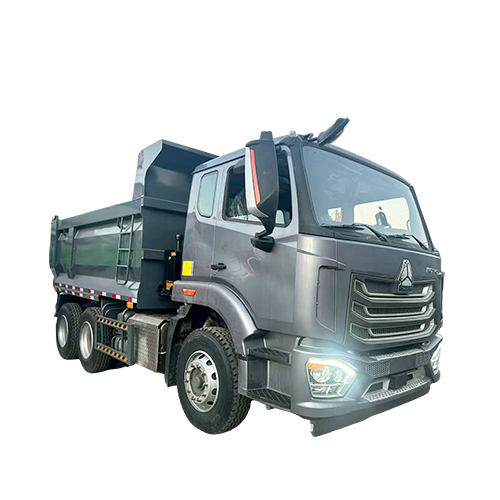
Dump trucks remain one of the most widely used forms of construction material hauling equipment because they combine loading flexibility, high material capacity, and fast unloading.
They are especially useful for moving sand, crushed stone, aggregates, road base materials, excavation spoil, and general earthmoving materials. Their hydraulic dumping function allows quick unloading, which helps keep construction workflows moving.
For contractors, the value of a dump truck is not only in how much it can carry. Its real value comes from how consistently it performs over hundreds or thousands of repeated cycles.
A well-matched dump truck should maintain stable power under load, dump materials safely, handle rough temporary roads, and remain easy to inspect and maintain throughout the project.
Chassis Strength and Structural Reliability
The chassis is the foundation of any hauling vehicle. In infrastructure projects, trucks frequently operate on unfinished roads, compacted soil, gravel surfaces, and uneven construction routes. These conditions create repeated vibration, twisting stress, and impact loads.
A strong chassis helps maintain vehicle geometry and supports long-term durability. If the frame is weak or poorly matched to the application, the truck may suffer from deformation, alignment problems, uneven tire wear, or reduced body stability.
For heavy material hauling, chassis strength should be evaluated together with suspension layout, axle configuration, and body structure. These systems work together to determine how well the vehicle carries load under real conditions.
Powertrain Matching and Hauling Performance
A powerful engine alone does not guarantee strong hauling performance. In real engineering use, the engine, transmission, axle ratio, and tire traction must work together.
When the powertrain is properly matched, the truck can start smoothly under load, climb temporary slopes, maintain stable movement on loose ground, and reduce drivetrain shock during stop-and-go cycles.
For construction material hauling equipment, low-speed torque is often more important than high-speed horsepower. Trucks working on construction sites rarely operate like highway vehicles. They move slowly, carry dense materials, stop frequently, and work under changing terrain resistance.
A well-matched powertrain improves hauling consistency and reduces mechanical strain.
Material Characteristics and Truck Configuration
Different construction materials behave differently during loading, transport, and unloading.
Sand flows easily but can increase dust exposure and enter joints or seals if not managed properly. Crushed stone is abrasive and can accelerate body wear. Wet soil may stick to the dump body and increase unloading resistance. Aggregates require stable load distribution to avoid uneven stress on the truck body and suspension.
The table below shows how material characteristics influence hauling equipment selection.
| Material Type | Main Transport Challenge | Equipment Focus |
|---|---|---|
| Sand | Dust exposure and high-volume movement | Sealing, body volume, stable dumping |
| Crushed Stone | Abrasion and impact loading | Wear-resistant body and strong chassis |
| Wet Soil | Sticking and increased weight | Hydraulic strength and body design |
| Aggregates | Repeated cycle transport | Load stability and suspension durability |
| Road Base Materials | Consistent supply demand | Cycle efficiency and reliability |
This is why professional equipment selection should always consider what material is being moved, not only how much material must be moved.
Construction Material Hauling Equipment: Hydraulic System and Unloading Efficiency
The hydraulic system is one of the most important parts of a dump truck used in construction hauling. It controls the lifting and lowering of the dump body and directly affects unloading speed and safety.
In large infrastructure projects, a truck may complete many dumping cycles every day. A slow or unstable hydraulic system can reduce site efficiency and create safety concerns, especially when unloading on uneven ground.
A reliable hydraulic system should lift smoothly under load, maintain stable pressure, resist leakage, and allow controlled body movement. For contractors, hydraulic reliability is closely linked to cycle efficiency and long-term productivity.
Construction Material Hauling Equipment: Suspension and Load Stability
Suspension performance affects more than comfort. It influences how safely and consistently the truck carries material across rough construction roads.
A well-designed suspension system helps absorb impact, maintain tire contact, protect the chassis, and improve vehicle control. This is especially important when carrying dense materials over uneven ground.
Poor suspension performance can lead to excessive vibration, unstable load movement, faster component wear, and driver fatigue. In demanding projects, these problems may gradually reduce daily output.
Braking Safety in Material Transport
Construction material hauling often involves heavy loads, temporary roads, slopes, and busy work zones. Under these conditions, braking performance becomes a critical safety factor.
A professional hauling truck should provide stable braking under full load, resist heat buildup during repeated braking, and maintain control during downhill movement.
Braking should be evaluated together with payload, axle configuration, tire condition, and road quality. A truck with strong hauling power but weak braking stability is not suitable for demanding construction transport.
Maintenance Accessibility and Fleet Availability
In large projects, equipment availability is often more important than individual specification advantages. A truck that is difficult to inspect or maintain may cause unnecessary downtime.
Fleet managers usually pay attention to how easily operators can check engine systems, hydraulic hoses, brakes, suspension parts, tires, and lubrication points. Simple inspection access helps maintenance teams identify problems earlier and keep trucks working longer.
For construction material hauling equipment, maintenance should be considered part of productivity planning. Preventive maintenance supports stable fleet availability and reduces unexpected interruptions.
Where Haiyu Fits Into Construction Material Hauling
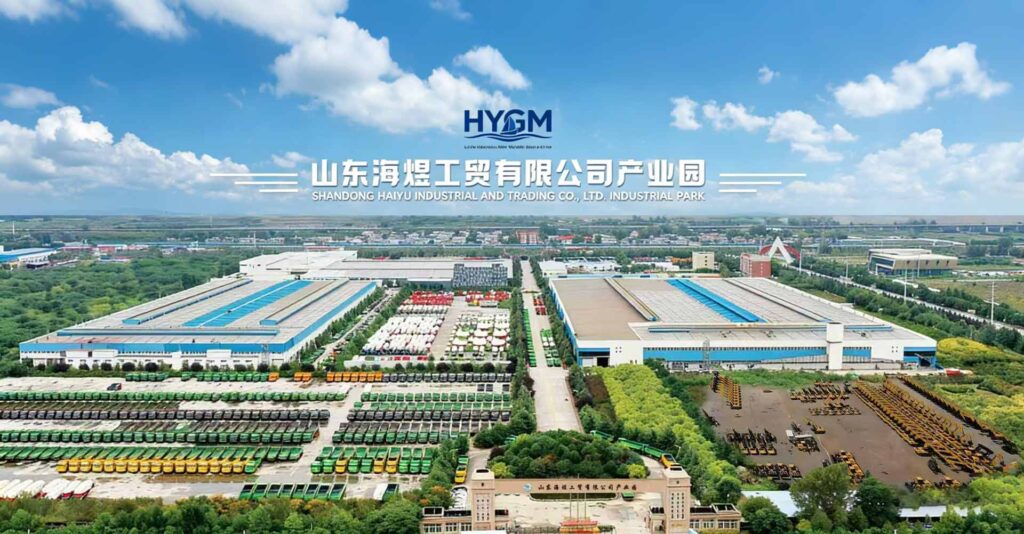
Haiyu can be positioned as a practical heavy-duty transport solution for construction and infrastructure projects. For website content, the brand should not only be described as a truck supplier. It should be connected with real working needs such as material flow, project reliability, hauling cycle stability, and long-term equipment support.
Haiyu heavy-duty trucks can support applications such as road construction, quarry material transport, industrial site development, earthmoving operations, and aggregate delivery. The key value is not simply moving more material in one trip, but helping contractors maintain reliable transport performance across the project lifecycle.
How Contractors Should Evaluate Hauling Equipment
When selecting construction material hauling equipment, contractors should look beyond the surface specifications. The real question is whether the equipment can maintain steady performance under the project’s working conditions.
A professional evaluation considers the relationship between material type, loading rhythm, haul route condition, unloading environment, maintenance support, and daily productivity targets. These factors together determine whether a truck will operate efficiently or become a bottleneck.
The right equipment should match the project workflow, not force the workflow to adapt to the machine.
Conclusion
Construction material hauling equipment plays a central role in infrastructure productivity. The right truck helps maintain material flow, reduce downtime, improve safety, and support stable project progress.
For contractors, equipment selection should not be based only on payload figures. Chassis strength, powertrain matching, hydraulic reliability, suspension stability, braking safety, and maintenance accessibility all influence real performance.
Haiyu heavy-duty trucks can be positioned around these practical working values, helping construction teams move materials more efficiently across highways, quarries, industrial sites, earthmoving projects, and large infrastructure developments.
FAQ
What is construction material hauling equipment?
Construction material hauling equipment refers to vehicles and machines used to transport materials such as soil, sand, aggregates, crushed stone, and road base materials within construction and infrastructure projects.
Why are dump trucks widely used for construction material hauling?
Dump trucks are widely used because they can carry different loose materials and unload quickly through hydraulic dumping systems, making them suitable for repeated construction transport cycles.
What affects hauling efficiency on construction sites?
Hauling efficiency is affected by material type, route condition, loading coordination, unloading space, truck configuration, maintenance condition, and daily site workflow.
Why is chassis strength important for hauling equipment?
Chassis strength affects structural durability, load stability, and long-term reliability when trucks operate on rough temporary roads or carry dense materials.
How can Haiyu trucks support infrastructure projects?
Haiyu trucks can support infrastructure projects by providing reliable heavy-duty transport for aggregates, earthmoving materials, road base materials, and quarry supply applications.