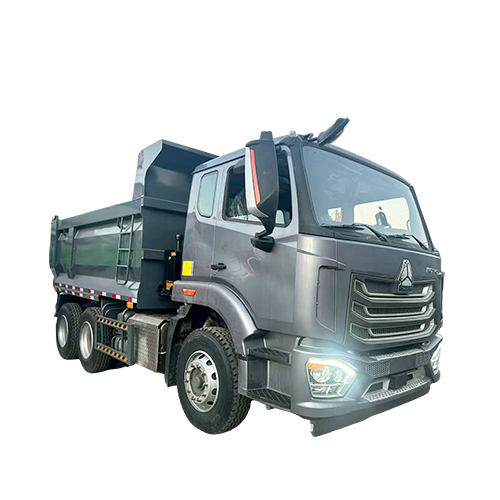

Why Dump Truck Selection Matters
The global dump truck market is valued at over $25 billion, with construction and mining operations accounting for nearly 68% of total demand. For fleet managers and procurement officers, selecting the right dump truck isn’t just about upfront costs—it’s about optimizing total cost of ownership (TCO), maximizing payload efficiency, and ensuring uninterrupted operations in demanding environments.
Whether you’re operating a small construction company with 5-10 trucks or managing a large-scale mining operation with hundreds of vehicles, the decisions you make during the procurement phase will ripple through every aspect of your business. According to industry research by Grand View Research, companies that carefully evaluate dump truck specifications before purchase achieve an average of 23% lower operating costs over a 5-year lifecycle.
This comprehensive guide walks you through the 7 essential factors every buyer must consider, provides detailed specification comparisons, and includes a practical procurement checklist to streamline your decision-making process.
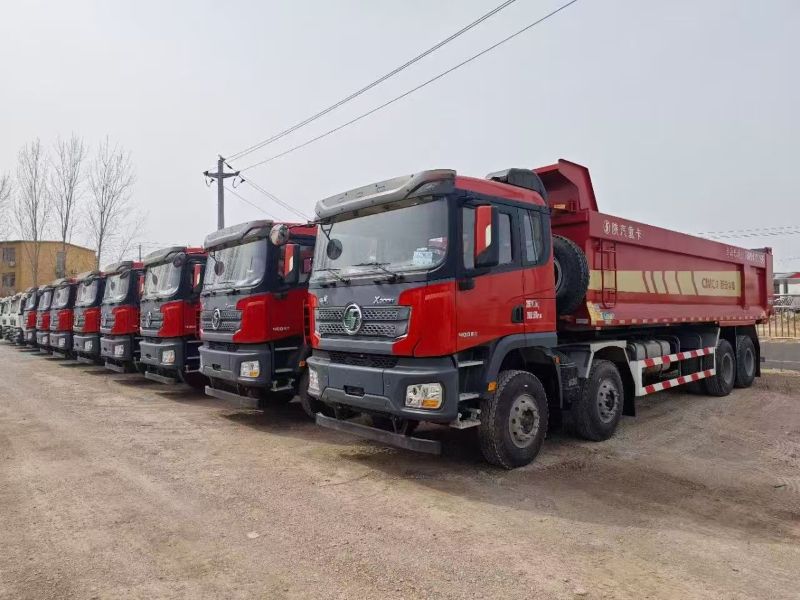
Understanding Your Application Scenarios
Before diving into specifications, you must clearly define your primary application environment. Different industries have vastly different operational requirements:
Construction Sites
Construction operations typically involve shorter hauling distances (under 10 km), frequent starts and stops, and operations on paved or semi-paved roads. Dust, debris, and mixed cargo (aggregates, sand, demolition materials) are common challenges.
Recommended configurations: 6×4 or 8×4 axle configurations with moderate payload capacity (25-40 tons). Articulated dump trucks work well for sites with limited maneuverability.
Mining Operations
Mining demands heavy-duty equipment capable of handling extreme payloads (50-80 tons), traversing unpaved terrain, and operating continuously for 18-20 hours per day. Rear dump and bottom dump configurations are popular choices for their durability and high capacity.
Recommended configurations: 10×4 or 12×4 configurations with maximum payload capacity (50-60+ tons). Engine power should exceed 400 HP for steep incline operations.
Quarries and Aggregate Production
Quarry operations require trucks that can handle abrasive materials (limestone, granite, gravel) and operate in closed-loop systems with consistent routes and predictable loads.
Recommended configurations: 8×4 rigid-frame dump trucks with reinforced steel bodies and hydraulic tailgates for precise material discharge.
Agricultural and Land Development
These applications typically involve lighter materials (soil, fertilizers, harvested crops) and require trucks that can operate on unpaved rural roads.
Recommended configurations: 6×4 standard dump trucks with 4-6 meter body length and good off-road capability.
7 Critical Factors in Dump Truck Selection
Factor 1: Axle Configuration
Axle configuration is the foundation of dump truck performance, directly affecting payload distribution, maneuverability, and road legality.
| Configuration | Best For | Payload Range | Advantages | Limitations |
|---|---|---|---|---|
| 6×4 | Construction, short-haul | 15-35 tons | Excellent maneuverability, lower maintenance | Limited payload vs. larger configs |
| 8×4 | Heavy construction, quarries | 30-50 tons | High payload, good stability | Higher fuel consumption |
| 10×4 | Mining, heavy industrial | 45-60 tons | Maximum payload, superior traction | Higher acquisition cost |
| Articulated (ADT) | Extreme terrain, site work | 25-45 tons | Superior off-road capability | Complex maintenance |
Technical Insight: For mining operations with 15%+ grades, a 10×4 configuration with all-wheel drive provides the necessary traction. Studies by Equipment World show that proper axle configuration selection can reduce tire wear by 30-40% and improve fuel efficiency by 12-18%.
Manufacturer Spotlight: As an experienced dump truck manufacturer, Haiyu offers comprehensive axle configurations across Howo, Shacman, and Sitrak chassis platforms, allowing buyers to match specifications precisely to their operational requirements.
Factor 2: Payload Capacity
Payload capacity determines your operational throughput and directly impacts cost per ton of material transported.
Key Considerations:
- Gross Vehicle Weight Rating (GVWR): The maximum legal weight including truck, body, and payload. Exceeding GVWR results in fines averaging $1,000-$5,000 per incident in North America.
- Target payload utilization: Aim for 80-90% of maximum rated capacity during normal operations to balance efficiency and equipment longevity.
- Future growth: Consider projects 3-5 years out; selecting marginal capacity today may require premature fleet expansion.
Industry Benchmark: According to Construction Equipment Guide, the average payload utilization rate across North American construction fleets is 82%, indicating that most operators select trucks slightly over their daily average requirements.
| Application Type | Recommended Payload | Rationale |
|---|---|---|
| Urban construction | 15-25 tons | Maneuverability, traffic restrictions |
| Highway construction | 30-40 tons | Optimal highway efficiency |
| Heavy civil/Mining | 50-60+ tons | Maximum cost efficiency |
Expert Insight: “Payload capacity decisions should be driven by your cost-per-ton analysis, not just acquisition price,” notes the National Stone, Sand & Gravel Association (NSSGA) in their fleet optimization guidelines.
Factor 3: Engine Power and Fuel Efficiency
Engine specifications directly influence productivity, fuel costs, and environmental compliance.
Power Requirements by Application:
| Application | Minimum Power | Recommended Power | Typical Torque |
|---|---|---|---|
| Light construction | 300-350 HP | 350-400 HP | 1,400-1,700 Nm |
| Heavy construction | 400-450 HP | 450-500 HP | 1,800-2,200 Nm |
| Mining/Steep grades | 500+ HP | 500-600 HP | 2,300-2,800 Nm |
Fuel Efficiency Considerations:
Modern diesel engines achieve fuel consumption rates of 0.18-0.25 liters per ton-kilometer under optimal conditions. Key efficiency factors include:
- Engine technology: Euro IV/VI or EPA 2010-compliant engines offer 8-15% better fuel economy than older Tier 3 engines
- Transmission type: Automated Manual Transmissions (AMT) improve fuel efficiency by 5-10% compared to manual transmissions
- Aerodynamics: Cab design affects fuel consumption by 3-7% at highway speeds
TCO Impact: Fuel typically represents 30-35% of total operating costs for dump trucks. A truck achieving 35 mpg vs. 28 mpg in the same application saves approximately $15,000-$25,000 annually in fuel costs.
Factor 4: Body Material and Design
The dump body is your truck’s most critical wear component. Material selection affects durability, weight, and corrosion resistance.
Common Body Materials:
| Material | Weight Reduction vs. Steel | Durability | Best For |
|---|---|---|---|
| Standard Hardox/AR Steel | Baseline | Excellent | General construction, aggregates |
| High-Tensile Steel (400-450 HB) | 5-10% lighter | Very Good | Mixed applications |
| Aluminum Alloy | 30-40% lighter | Good | Light materials, fuel-sensitive ops |
| Stainless Steel | 10-15% lighter | Excellent | Corrosive materials |
Body Design Features:
- Double-walled construction: Increases rigidity while reducing maintenance costs by 40%
- Brinell hardness rating: Look for 400+ HB for abrasive materials like granite and iron ore
- Floor thickness: 8-12 mm minimum for heavy-duty applications
- Sidewall reinforcement: Prevents bulging under peak loads
Expert Tip: The International Mining Equipment Council (IMEC) recommends specifying 10 mm floor thickness and 8 mm sidewall thickness as minimum standards for mining applications handling minus 200 mm material.
Factor 5: Hydraulic System
The hydraulic system powers the dumping mechanism and significantly impacts cycle time and reliability.
Key Specifications:
| Component | Standard Spec | Heavy-Duty Spec | Premium Spec |
|---|---|---|---|
| Pump Type | Gear pump | Piston pump | Variable displacement |
| Operating Pressure | 16-18 MPa | 20-25 MPa | 25-30 MPa |
| Raise Time | 20-30 seconds | 15-20 seconds | 10-15 seconds |
| Cylinder Count | Single-stage | Two-stage | Multi-stage telescopic |
Performance Impact: Reducing raise time from 25 seconds to 15 seconds across 500 cycles per day saves approximately 1.4 hours of operational time daily—translating to 35+ additional loads per truck per month.
Reliability Considerations:
- Hard chrome-plated cylinders last 3-5x longer than standard cylinders in dusty environments
- Seal quality: Premium seals reduce downtime by 60-70%
- Filter accessibility: Easy-access hydraulic filters reduce maintenance time by 40%
Factor 6: Emission Standards Compliance
Emission regulations vary by region but are tightening globally. Selecting compliant equipment protects your investment and ensures operational continuity.
Major Emission Standards:
| Standard | Region | Key Requirements | Phase-out Timeline |
|---|---|---|---|
| EPA 2010 / Tier 4 Final | North America | 80-90% PM reduction vs. Tier 3 | Mandatory since 2015 |
| Euro VI | Europe | 67% NOx, 86% PM reduction vs. Euro V | Mandatory 2014+ |
| China VI | China | Equivalent to Euro VI | Mandatory 2021+ |
| Stage IIIB / IV | Export markets | Moderate PM/NOx limits | Varies by country |
Strategic Considerations:
- Resale value: EPA 2010/Euro VI trucks retain 15-25% higher residual value
- Operating restrictions: Many urban areas now prohibit pre-Euro IV vehicles
- Fuel requirements: Advanced engines require ultra-low sulfur diesel (ULSD), affecting operational costs in remote areas
Haiyu Advantage: As an ADR-certified dump truck manufacturer, Haiyu ensures all exported vehicles meet destination market emission standards, eliminating compliance risks for international buyers.
Factor 7: After-Sales Support and Service Network
Equipment downtime costs $500-$2,000 per hour in lost productivity for mining operations. Manufacturer support quality is as critical as specification selection.
Evaluation Criteria:
- Parts availability: Response time for critical parts should be <24 hours for major markets
- Service network density: Look for authorized dealers within 100-200 km of your primary operations
- Technical support: 24/7 hotline availability is essential for round-the-clock operations
- Warranty terms: Comprehensive warranties covering powertrain (5 years/500,000 km) indicate manufacturer confidence
Red Flags to Avoid:
- Manufacturers unable to provide local service references in your region
- Parts lead times exceeding 2 weeks for standard components
- No training programs for your maintenance technicians
Industry Statistic: According to Research and Markets, 67% of dump truck buyers cite after-sales support as their second most important purchase consideration, following payload capacity.
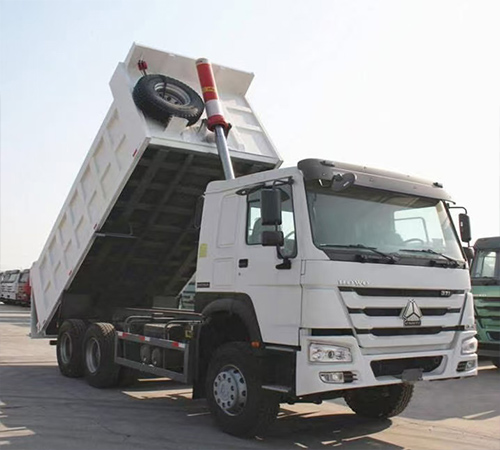
Dump Truck Specifications Comparison Table
| Specification | Light Duty (6×4) | Medium Duty (8×4) | Heavy Duty (10×4) |
|---|---|---|---|
| Engine Power | 300-400 HP | 400-500 HP | 500-600+ HP |
| Payload Capacity | 15-25 tons | 30-45 tons | 50-60+ tons |
| Body Volume | 12-16 m³ | 20-28 m³ | 30-40+ m³ |
| Fuel Tank | 300-400 L | 400-500 L | 500-600 L |
| Transmission | 9-12 speed | 12-16 speed | 16-18 speed |
| Application | Urban, light construction | Heavy construction, quarry | Mining, heavy industrial |
| Typical Price Range | Entry-level | Mid-range | Premium |
Dump Truck Procurement Checklist
Use this checklist when evaluating dump trucks for your fleet:
Pre-Purchase Evaluation
- Define primary application and operating conditions
- Calculate required payload capacity with growth margin (20-30%)
- Verify axle configuration meets local road weight regulations
- Confirm emission standard compliance for operating regions
- Assess engine power against terrain requirements (grades, traction)
Technical Specifications
- Verify body material matches material abrasiveness
- Check hydraulic system raise/lower times
- Confirm transmission type (manual, AMT, automatic)
- Evaluate dump body geometry for target materials
Financial and Operational
- Calculate 5-year TCO including fuel, maintenance, insurance
- Obtain 3+ supplier quotes for same specifications
- Review manufacturer certifications (ISO 9001, ADR, industry-specific)
- Verify warranty coverage scope and duration
- Confirm parts availability and service response times
Due Diligence
- Request 3+ customer references in similar applications
- Conduct site visit to manufacturing facility (if possible)
- Review financial stability of manufacturer
- Verify export documentation and logistics capabilities
FAQ
1. What’s the difference between a standard dump truck and a mining dump truck?
Mining dump trucks are specifically engineered for extreme operating conditions with significantly higher payload capacities (50-80+ tons vs. 15-45 tons for standard models). Key differences include reinforced frames, larger engines (500-600+ HP), enhanced suspension systems, and all-wheel drive capability. Mining trucks also feature increased ground clearance for traversing uneven terrain and enhanced braking systems for steep downhill operations. Standard dump trucks optimized for construction offer better maneuverability and fuel efficiency but cannot withstand the continuous abuse typical of mining environments.
2. How do I determine the right payload capacity for my operations?
Calculate your average load weight based on 30+ days of operational data, then add a 20-30% safety margin for peak loads. Consider three scenarios: daily average load, peak load, and future expansion needs. If your average is 30 tons but peaks reach 38 tons, a 40-45 ton rated truck provides appropriate capacity. Selecting based solely on average loads leads to overloading penalties and accelerated component wear, while over-specifying significantly increases acquisition and operating costs.
3. What maintenance schedule should I follow for heavy-duty dump trucks?
Heavy-duty dump trucks require scheduled maintenance intervals based on operating hours rather than time alone. Standard intervals include: oil and filter changes every 250-500 operating hours, transmission service every 2,000-4,000 hours, major inspection at 5,000 hours, and engine overhaul consideration at 15,000-20,000 hours. For mining operations with continuous 18-20 hour daily use, maintenance intervals should be shortened by 20-30%. Following manufacturer-specified intervals extends truck lifespan to 25,000-40,000 operating hours before major rebuild.
4. Is a brand-name chassis important when selecting a dump truck?
Yes, chassis quality fundamentally impacts truck performance and longevity. Established brands like Howo, Shacman, and Sitrak have decades of engineering refinement behind their drivetrain components. Brand-name chassis typically offer 15-20% better component availability globally, longer parts support lifecycles (often 15+ years), and proven dealer networks for service support. Unknown or budget chassis manufacturers may offer lower acquisition prices but often incur 40-60% higher maintenance costs over a 5-year period due to component failures and extended downtime.
5. What emission standards should I specify for international operations?
Emission standards depend on your destination country’s regulations and operating location type. For North America: specify EPA 2010/Tier 4 Final. For European Union: specify Euro VI. For Africa, Southeast Asia, or Latin America: standards vary significantly by country—research specific requirements or work with an experienced dump truck supplier who understands regional regulations. Purchasing equipment exceeding local requirements provides higher resale value and longer operational runway as standards tighten.
6. How long does a quality dump truck last with proper maintenance?
With proper maintenance and reasonable operating conditions, a quality heavy-duty dump truck delivers 25,000-40,000 operating hours before requiring major powertrain overhaul. This translates to approximately 8-15 years of service for typical construction operations or 5-8 years for severe-duty mining applications. Key factors affecting lifespan include: maintenance adherence (30% impact), load management practices (25% impact), operating environment severity (25% impact), and component quality (20% impact). Budget-tier equipment may require replacement at 12,000-15,000 hours due to frame fatigue and drivetrain failures.
Conclusion
Selecting the right dump truck requires balancing technical specifications, operational requirements, budget constraints, and long-term strategic goals. There’s no universally “best” dump truck—only the optimal configuration for your specific application.