
Table of Contents
- Start With the Work
- Match Capacity to the Task
- Review the Configuration
- Check Compliance and Compatibility
- Compare Practical Options
- Inspect the Equipment
- Prepare the RFQ
- FAQs
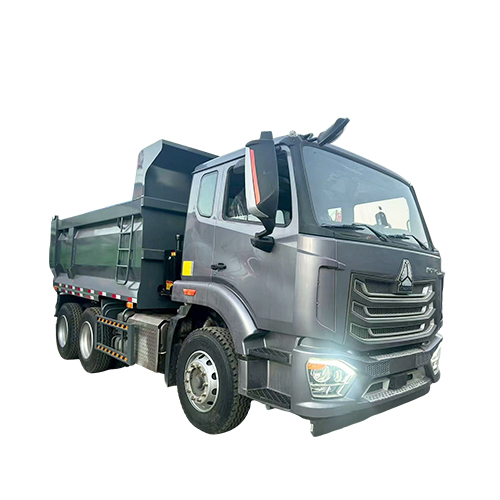
A LNG tractor truck should be selected from the work it must perform, not from a headline specification. For long-haul and regional fleets evaluating an alternative-fuel tractor, the real procurement problem is to match vehicle range and refueling access to routes without weakening payload or service readiness. A useful evaluation connects the operating cycle, site or route, legal limits, maintenance resources, and operator workflow before a configuration is approved.
Start With the Real Operating Work
Write a duty profile before comparing equipment. Record the normal task, the most demanding routine task, daily working hours, terrain or road surface, climate, loading method, and expected repositioning. The LNG tractor truck supplier should see the difficult conditions as well as the average ones.
The core review should cover route distance, fuel storage, refueling network, gross combination mass, axle layout, cooling, local parts, and driver procedures. Treat these as one system: increasing capacity or reach can change mass, stability, transport, access, wear, and service needs. Ask the supplier to explain the assumptions behind the proposed LNG tractor truck, rather than accepting an isolated catalogue value.
- Describe the material, cargo, or production task in measurable terms.
- Identify access limits, gradients, surfaces, overhead restrictions, and turning space.
- State the heaviest or most difficult recurring duty.
- List the operators, local service skills, and replacement parts available.
- Confirm destination-country registration, safety, and environmental requirements.
Match Capacity to the Task, Not the Label
A LNG tractor truck can be technically powerful and still be poorly matched to the operation. Rated values are usually measured under defined conditions. Actual production depends on material behavior, operator technique, setup time, traction, site interruptions, and the rest of the fleet.
Request the rated value, the conditions used to obtain it, and the practical limit for the proposed configuration. Then test that information against the buyer’s own cycle. A sensible LNG tractor truck specification leaves an operating margin without adding mass or complexity that the work does not need.
Review the Working Configuration
Configuration choices include dedicated routes versus flexible dispatch; larger versus smaller onboard fuel storage; regional versus long-haul duty. Each choice affects access, productivity, stability, wear, and maintenance. The correct decision should be visible in a drawing or component schedule, not left as an informal promise.
Ask where high loads enter the structure, how moving or removable parts are secured, how the operator observes the work area, and how routine service is performed. On a LNG tractor truck, safe access to inspection points is as important as the nominal performance figure.
Check Compliance, Transport, and Compatibility
Local rules determine what can be registered, transported, or operated. Confirm current mass, dimensions, axle or ground-load limits, braking, lighting, emissions, guarding, and workplace requirements with the relevant authority. For road vehicles, the UNECE vehicle regulations portal is a useful reference. For construction machinery, consult applicable workplace requirements such as OSHA equipment guidance while still verifying local law.
The LNG tractor truck must also fit the surrounding system: tractors, haul units, loading equipment, attachments, transport trailers, fuel or charging infrastructure, workshop tools, and operator competence. Compatibility should be confirmed before production or dispatch.
Compare Practical Configuration Options
| Decision area | When to prioritize it | Evidence to request |
|---|---|---|
| Capacity and performance | High utilization or demanding material | Rated conditions and application calculation |
| Access and maneuverability | Restricted sites, yards, or routes | Dimensioned drawing and turning or working envelope |
| Durability package | Abrasive, dusty, wet, or rough conditions | Component schedule, protection, and service plan |
| Operator and maintenance features | Remote sites or multi-shift use | Manuals, inspection points, parts list, and training scope |
Do not choose a LNG tractor truck by selecting the strongest-looking option in every row. The best combination is the one that meets the duty profile with clear documentation, reasonable service demands, and compliance in the operating market.
Inspect Before Delivery
Pre-delivery inspection should connect the approved specification to the finished unit. For this LNG tractor truck, inspect fuel-system labels and protection, mounting, valves, leak-detection provisions, brakes, tires, electrical systems, and documents. Photograph identifiers and record test results so that later maintenance begins with an accurate baseline.
- Compare serial numbers and major components with the order.
- Measure critical dimensions and working clearances.
- Operate every normal function through its intended range.
- Check alarms, guards, emergency controls, brakes, lights, and labels as applicable.
- Collect manuals, parts information, inspection records, and required compliance documents.
Prepare a Clear RFQ
A useful RFQ for a LNG tractor truck includes the duty profile, operating location, material or cargo, required output, working hours, access limits, transport method, compatibility data, climate, local rules, preferred service items, and required documents. Attach photographs or layout drawings when access is complicated.
Ask the manufacturer to identify assumptions, exclusions, and items requiring buyer confirmation. Before approval, resolve every placeholder in the drawing and component list. This reduces the risk of receiving a LNG tractor truck that looks correct in a quotation but cannot perform the intended daily work.
Frequently Asked Questions
What is the first specification to confirm?
Start with the real duty profile. The first useful specification for a LNG tractor truck depends on the task, material or cargo, site, and legal limits.
Should buyers choose the highest available capacity?
No. Excess capacity can add mass, complexity, access problems, and maintenance without improving the actual work cycle.
Why is a dimensioned drawing important?
It verifies interfaces, clearances, working envelopes, component positions, and the exact configuration before manufacturing or shipment.
What should a pre-delivery inspection include?
Inspect the finished LNG tractor truck against the drawing, operate its functions, verify safety items, and collect component and test records.
What information should be sent for a quotation?
Send the application, operating conditions, required performance, compatibility data, destination rules, maintenance resources, and documentation needs.
Discuss the Application With Haiyu
Share your operating profile, required configuration, destination market, and compatibility information with the LNG tractor truck product team or contact Haiyu. The goal is a documented LNG tractor truck configuration that can be reviewed against the real job before an order decision.