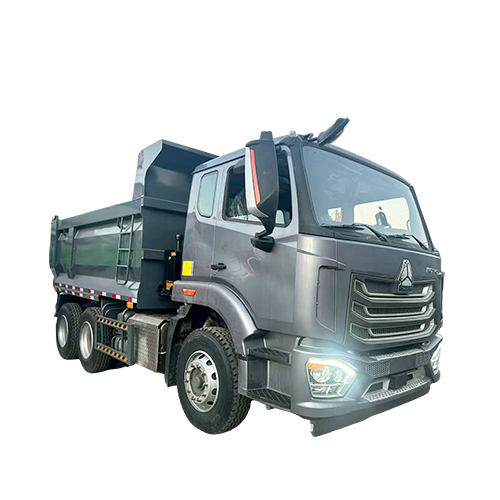
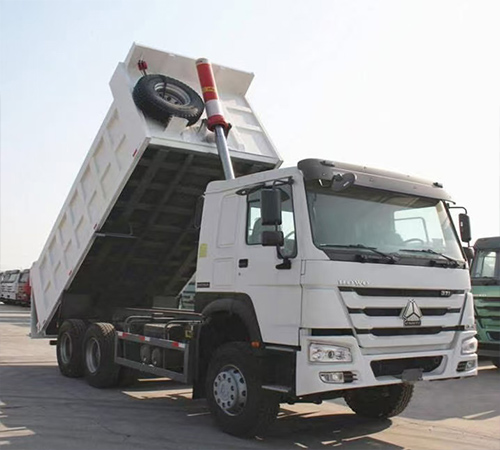
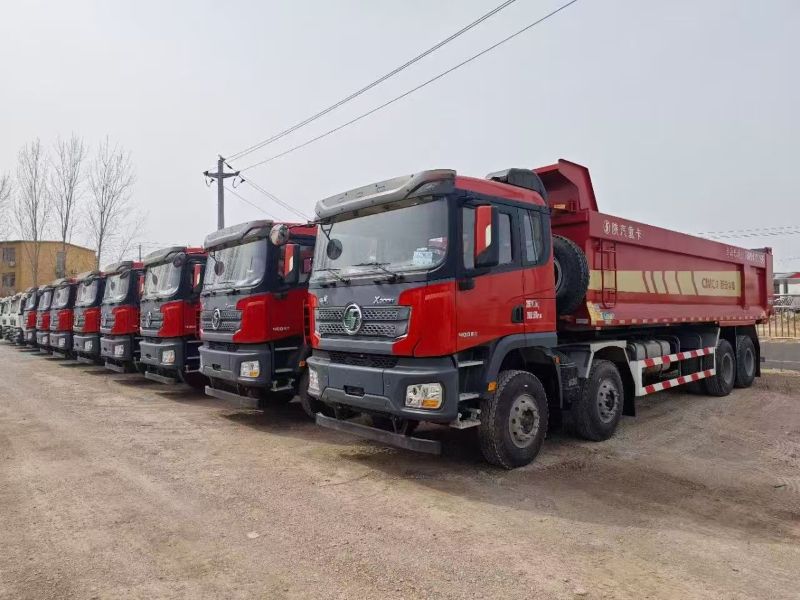
In mining, quarrying, and large-scale earthmoving projects, hauling performance depends less on appearance or nominal payload and more on how the machine behaves under continuous mechanical stress. An off-road dump truck must deal with unstable ground, steep gradients, abrasive materials, high-impact loading, and long operating cycles. These are conditions where ordinary road transport vehicles quickly lose efficiency, stability, and reliability.
A professional evaluation of an off-road dump truck should focus on five core systems: chassis structure, powertrain matching, axle and suspension design, hydraulic dumping performance, and thermal management. When these systems are properly engineered as a whole, the machine can maintain stable productivity in harsh working environments.
Why Off-Road Hauling Requires Specialized Engineering
Mining and quarry haul roads are not fixed, smooth transportation routes. They are temporary operating surfaces shaped by blasting, excavation, weather, and continuous heavy traffic. Ground conditions may change throughout the day, especially after rainfall or during intensive production cycles.
This creates several engineering challenges:
- high rolling resistance from loose aggregate
- repeated torsional stress from uneven ground
- traction loss on slopes or wet surfaces
- structural fatigue caused by impact loading
- brake and drivetrain heat accumulation during downhill hauling
An off-road dump truck is designed to absorb and manage these forces while keeping hauling cycles consistent.
Chassis Strength and Frame Fatigue Resistance
The chassis is the structural backbone of an off-road dump truck. In quarry and mining applications, frame durability is critical because the vehicle is constantly exposed to twisting loads and impact shocks.
A professional-grade off-road dump truck usually requires:
- high-strength steel frame rails
- reinforced cross members
- optimized stress distribution points
- torsion-resistant chassis geometry
- strong body-mounting structures
Frame fatigue is one of the most serious long-term risks in off-road hauling. Once the chassis begins to deform or crack, alignment, suspension behavior, and body stability can all be affected. That is why chassis engineering is often more important than simply increasing engine power.
Powertrain Matching for Heavy-Load Conditions
In off-road applications, the engine, transmission, and final drive must work as one system. A powerful engine alone does not guarantee strong performance if the transmission ratios or axle configuration are not matched to the working environment.
An effective off-road dump truck powertrain should provide:
- strong low-speed torque
- stable power delivery under full load
- efficient gear transitions on slopes
- reduced driveline shock during start-stop cycles
- reliable performance during long duty cycles
For mining and quarry operations, low-speed torque is especially important. Trucks often need to start moving under full payload on uneven ground, and that requires controlled pulling force rather than high-speed horsepower.
Axle Configuration and Traction Control
Axle configuration directly affects traction, load distribution, and ground contact. In rough terrain, poor axle matching can lead to wheel slip, unstable handling, and accelerated tire wear.
A properly configured off-road dump truck should maintain balanced axle loading under different operating conditions, including:
- uphill hauling
- downhill return trips
- turning under partial load
- dumping on uneven ground
- crossing soft or broken surfaces
More driven axles can improve traction, but they also add mechanical complexity. The correct configuration depends on site conditions, haul distance, and material density.
Suspension Performance in Harsh Terrain
Suspension systems in off-road dump trucks must do more than provide ride comfort. They protect the chassis, stabilize the load, and keep the tires in contact with the ground.
A professional suspension design improves:
- shock absorption under heavy payload
- body stability during turning
- traction consistency on uneven roads
- frame protection against vibration fatigue
- operator control during long shifts
In mining environments, suspension failure can quickly affect productivity because unstable hauling reduces cycle speed and increases safety risk.
Tire Selection and Ground Contact Efficiency
Tires are one of the most stressed components in off-road hauling. They are exposed to sharp rocks, deep ruts, abrasive surfaces, and repeated impact loading.
Professional tire selection should consider:
| Factor | Why It Matters in Off-Road Hauling |
|---|---|
| Tread depth | Improves traction on loose or muddy surfaces |
| Sidewall strength | Reduces puncture and deformation risk |
| Heat resistance | Supports long hauling cycles |
| Load rating | Matches payload and axle configuration |
| Ground contact area | Improves stability and reduces sinkage |
Incorrect tire selection can reduce traction, increase fuel consumption, and shorten service life.
Hydraulic Dumping System Reliability
The hydraulic system is critical because it directly controls unloading efficiency. In quarry and mining operations, the dump body may lift dozens or hundreds of times per day, often while carrying dense or abrasive materials.
A reliable off-road dump truck hydraulic system should provide:
- stable lifting force under full load
- controlled body movement
- pressure resistance under repeated cycles
- durable cylinder seals
- heat-resistant hydraulic fluid performance
Hydraulic instability can cause slow dumping, uneven lifting, pressure loss, or unsafe unloading conditions.
Brake System and Downhill Safety
Brake systems in off-road dump trucks must handle extreme thermal loads. Downhill travel with heavy payloads creates continuous braking demand, especially in quarry and mining sites with steep haul roads.
Professional braking performance depends on:
- service brake capacity
- engine brake or auxiliary brake support
- brake cooling efficiency
- tire-road friction
- load distribution balance
Brake fade is a serious risk in heavy-duty downhill operation. This is why braking systems must be evaluated together with payload, slope gradient, and haul road design.
Cooling System and Thermal Management
Thermal control is a key factor in continuous off-road operation. Engines, transmissions, hydraulic systems, and brakes all generate heat under heavy load.
A well-designed off-road dump truck should have:
- high-capacity radiator systems
- efficient airflow design
- protected cooling cores
- durable hoses and fluid circuits
- proper separation from dust-heavy airflow zones
In dusty quarry environments, radiator clogging is a common cause of overheating. Regular cleaning and cooling system inspection are essential.
Material Type and Body Wear Resistance
The type of material transported has a direct effect on dump body wear. Sand, gravel, crushed stone, ore, and wet soil all create different stress patterns.
For example:
- crushed stone increases abrasion
- wet soil increases sticking and unloading resistance
- ore creates high point-load impact
- sand may flow easily but can accelerate joint and seal contamination
A professional-grade off-road dump truck body should be selected based on material density, abrasiveness, and loading method.
Maintenance Strategy for Off-Road Dump Trucks
Off-road dump truck maintenance should be condition-based, not only mileage-based. Mining and quarry machines often work harder in one day than road trucks do over much longer distances.
Key maintenance areas include:
- chassis crack inspection
- suspension pin and bushing wear
- tire pressure and tread damage
- hydraulic hose and seal condition
- brake temperature and wear monitoring
- cooling system cleaning
- drivetrain lubrication
A preventive maintenance plan helps reduce unplanned downtime and keeps hauling cycles predictable.
How to Select the Right Off-Road Dump Truck
The best off-road dump truck is not always the one with the highest payload. The correct machine should match the actual site conditions.
Before selecting a model, evaluate:
- haul road quality
- slope gradient
- turning radius
- material density
- loading equipment size
- average haul distance
- weather and dust conditions
- maintenance support availability
This site-based evaluation is more reliable than choosing a truck only by rated capacity.
Conclusion
An off-road dump truck is a specialized engineering machine designed for difficult working environments. Its performance depends on the coordination of chassis strength, powertrain matching, axle configuration, suspension stability, hydraulic reliability, braking capacity, and thermal management.
For mining, quarrying, and heavy earthmoving operations, professional equipment selection should always be based on real site conditions. A well-matched off-road dump truck improves productivity, reduces downtime, protects components, and supports safer long-term operation.
FAQ
What makes an off-road dump truck different from a regular dump truck?
An off-road dump truck is built with stronger chassis, heavier suspension, better traction capability, and reinforced systems for rough terrain and heavy-load operation.
What is the most important factor when choosing an off-road dump truck?
Site conditions are the most important factor, including terrain, slope, material type, haul distance, and road maintenance quality.
Are off-road dump trucks suitable for quarry operations?
Yes. They are widely used in quarry operations because they can handle abrasive materials, rough roads, and repeated heavy hauling cycles.
Why is low-speed torque important for off-road dump trucks?
Low-speed torque helps the truck start and climb under full load, especially on uneven or loose ground.
How can operators extend the life of an off-road dump truck?
Regular inspections of chassis, suspension, tires, hydraulics, brakes, and cooling systems are essential for long-term reliability.