Table of Contents
- What Is a Side Wall Semi Trailer?
- Start With the Cargo
- Choose the Wall Design
- Match the Chassis to the Work
- Check Tractor Compatibility
- Compare Trailer Types
- Inspect Before Ordering
- Prepare a Clear RFQ
- FAQs
A side wall semi trailer is often specified as a general-purpose freight solution, but “general purpose” does not mean one configuration suits every load. The right design depends on cargo behavior, loading method, route conditions, tractor compatibility, and the rules in the destination market. Buyers who define these inputs before requesting a quotation receive a more useful specification and reduce the chance of costly modifications after delivery.
What Is a Side Wall Semi Trailer?
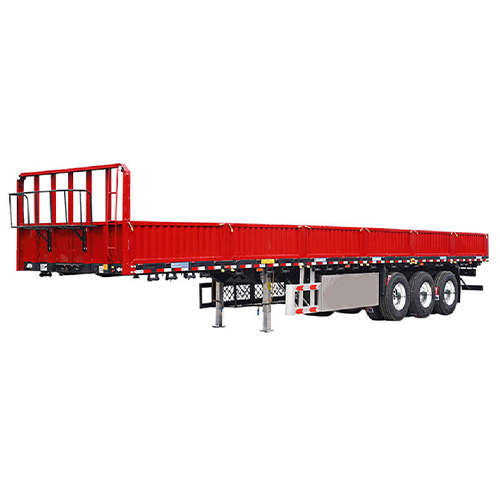
A side wall semi trailer combines an open deck with side panels that help contain packaged, palletized, bagged, or irregular freight. The panels may be fixed, hinged, folding, or removable. Unlike an enclosed trailer, the deck can remain accessible from the side or above. Unlike a plain flatbed, the body provides a physical boundary around the load.
That distinction matters. The walls assist with containment and workflow, but they do not replace correctly rated cargo restraints. Any side wall semi trailer must still use a securement plan suitable for the cargo, route, and applicable law. The UNECE vehicle regulations resource is a useful starting point for international vehicle requirements, while final compliance should always be confirmed with the relevant authority in the operating country.
Start With the Cargo, Not the Axle Count
Before discussing dimensions, describe the normal load in operational terms. Give the supplier the cargo type, maximum single-load weight, approximate dimensions, whether the weight is concentrated or distributed, and how often the trailer runs fully loaded. A side wall semi trailer used for palletized goods needs different deck access and restraint points from one carrying bagged agricultural products.
- State the heaviest routine cargo, not only the average load.
- Explain whether loading uses a forklift, crane, conveyor, or manual handling.
- Identify cargo that can shift, settle, leak, or absorb moisture.
- Describe paved roads, rough access roads, steep grades, and yard constraints.
- Confirm whether the same trailer must occasionally carry containers or oversized items.
Dense loose material can exert significant pressure on panels and locks. Do not assume a standard side wall semi trailer is suitable for sand, aggregate, ore, or other dense bulk cargo. Ask the manufacturer to evaluate the actual material and unloading process. A tipper or another purpose-built body may be more appropriate.
Choose the Wall Design Around Loading Workflow
Wall height is only one part of the decision. Panel length, hinge position, latch access, stake arrangement, and removable sections affect daily handling. Higher walls add volume but can also add tare mass and make side loading harder. A side wall semi trailer with several shorter opening sections may suit multi-stop distribution, while longer panels may be simpler for a repetitive cargo flow.
Ask how each panel is supported when open and how the locks can be inspected. Operators should not need improvised tools or unsafe lifting positions to use the body. If forklift access is important, check that opened panels do not obstruct the planned approach. If crane loading is routine, confirm clear overhead access and protection for panel edges.

Match the Chassis, Floor, and Suspension to the Work
A side wall semi trailer chassis cannot be selected from payload wording alone. Request the rated gross vehicle mass, trailer tare mass, axle and tire ratings, kingpin load assumptions, and allowable payload for the proposed configuration. The usable payload of a side wall semi trailer is limited by the complete system and local axle-load rules, not by the strongest component in isolation.
The floor of a side wall semi trailer should reflect point loading and the loading equipment. Forklift traffic, steel products, and cargo with small contact areas can impose concentrated loads. Ask for the deck material, cross-member arrangement, permitted point load, and reinforcement plan. For frequent wet or coastal operation, discuss drainage, surface preparation, coating repair, and corrosion inspection rather than relying on a generic claim of weather resistance.
Suspension choice should follow the route and maintenance environment. Mechanical suspension is familiar in many heavy-duty operations; air suspension may help where ride characteristics, loading height, or axle management are important. Neither option is automatically superior. A side wall semi trailer should be configured around available service skills, spare parts, road surface, speed profile, and cargo sensitivity.
Check Tractor Compatibility Before Production
A technically sound trailer can still perform poorly if it does not match the tractor. Provide the tractor model, fifth-wheel height, kingpin requirement, electrical connection, braking interface, tire specification, and intended gross combination mass. Confirm clearance through the expected steering angle and check landing-gear height for the loading yard.
The side wall semi trailer drawing should show the loaded coupling height and weight distribution assumptions. Buyers should also check that replacement tires, brake parts, lighting components, and common wear items are available in the destination market. This practical review is especially important for mixed fleets where more than one tractor may pull the same trailer.
Compare the Main Trailer Options
| Trailer type | Best fit | Main limitation to assess |
|---|---|---|
| Side wall semi trailer | Packaged, bagged, palletized, and mixed general freight | Limited weather protection; panels are not the sole cargo restraint |
| Flatbed semi trailer | Machinery, steel, long cargo, and loads needing open access | Cargo needs a complete external securement system |
| Fence semi trailer | High-volume loads needing ventilation or taller containment | Higher body and cargo can affect access and center of gravity |
| Cargo box semi trailer | Freight needing greater enclosure and security | Less flexible side and overhead loading |
If operational flexibility is the priority, a side wall semi trailer with removable panels may bridge some use cases, but every optional function must be engineered into the design. Container twist locks, added lashing points, toolboxes, spare-wheel carriers, and tarpaulin structures all affect weight, clearance, and maintenance.
Inspect the Details Before Ordering
Side wall semi trailer quality review should connect documents to the actual unit. Ask for a dimensioned drawing, component schedule, welding and coating process, brake-system specification, and inspection checklist. During pre-delivery inspection, compare the finished side wall semi trailer with the approved drawing and record identifiers for major components.
- Check frame alignment, visible weld consistency, and high-stress junctions.
- Operate every hinge, latch, removable stake, and landing-gear function.
- Verify brake, ABS or EBS, lighting, and electrical compatibility as applicable.
- Inspect floor flatness, drainage paths, coating coverage, and exposed edges.
- Confirm tire ratings and component labels against the approved specification.
- Request the manuals and documents needed for registration, operation, and maintenance.
For cargo securement principles, buyers can also consult the IMO/ILO/UNECE CTU Code resource. It does not replace local road rules or engineering approval, but it reinforces the need to plan packing and restraint around real transport forces.
Prepare a Clear RFQ
A useful side wall semi trailer request for quotation should describe the operating problem before listing preferred components. Include cargo, payload target, loading method, route, destination country, tractor information, expected annual use, maintenance capability, and required documentation. Then ask the manufacturer to explain why the proposed side wall semi trailer configuration fits those conditions.
Do not approve a drawing with unresolved placeholders. Dimensions, axle spacing, coupling height, wall arrangement, restraint points, tire specification, brake interface, accessories, and document responsibilities should be explicit. Where legal limits or certification are involved, verify current requirements with the appropriate local authority before production.
Frequently Asked Questions
What cargo is suitable for a side wall semi trailer?
It commonly suits packaged, palletized, bagged, agricultural, and mixed general freight. Suitability still depends on cargo density, restraint needs, loading method, and local rules.
Can the side panels replace straps or chains?
No. Panels help contain cargo, but the load still needs an engineered securement method with correctly rated equipment and attachment points.
Should side walls be fixed or removable?
Fixed panels suit stable, repetitive work. Folding or removable panels improve side access and versatility, but their hinges, latches, storage, and operating method require careful review.
How should buyers choose axle count?
Choose it from the complete weight distribution, legal axle limits, route, maneuverability, tires, suspension, tractor, and frame design—not from payload marketing language alone.
What information should be sent for a custom quotation?
Send the cargo description, maximum load, loading process, route conditions, destination rules, tractor details, desired wall operation, accessories, and required technical documents.
Discuss Your Operating Requirements
Share your cargo profile, loading method, route conditions, tractor details, and destination market with the Haiyu team. We can discuss a side wall semi trailer specification based on your real operating requirements and provide a configuration for technical review.