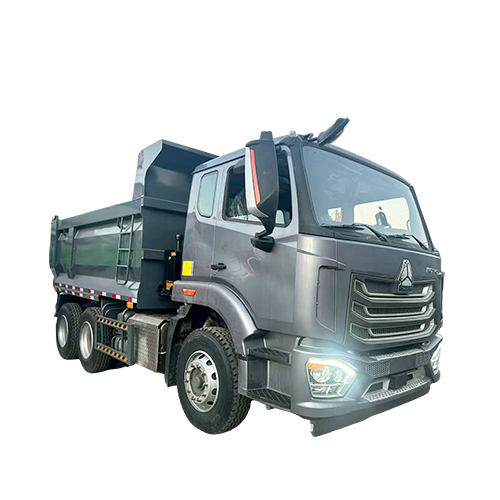
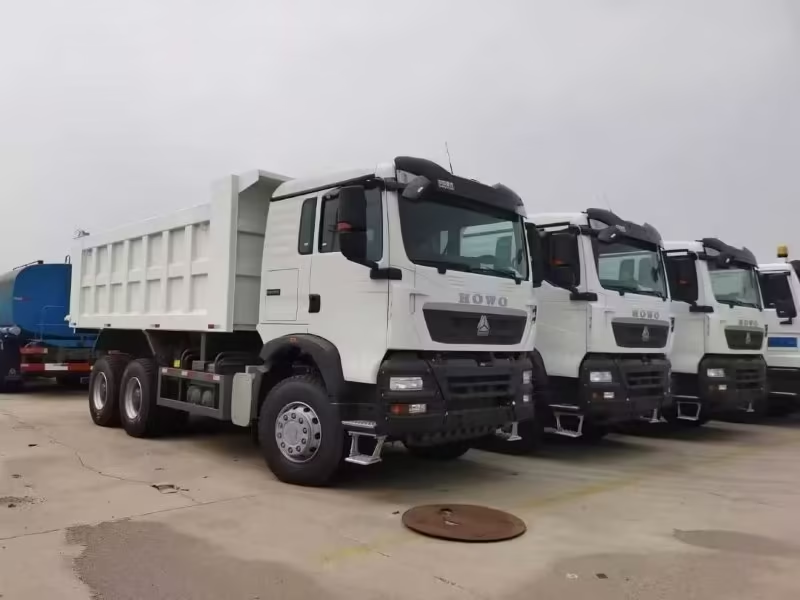
Infrastructure construction is not a simple material transport task. In road building, quarry supply, port construction, industrial park development, and large earthmoving projects, transport equipment must operate under high load, unstable road conditions, repeated loading cycles, and long working hours. Under these conditions, the performance of a heavy duty dump truck directly affects site productivity, construction progress, and fleet operating stability.
For contractors and equipment managers, choosing a dump truck is not only about rated payload. The real focus should be chassis durability, powertrain matching, suspension stability, hydraulic reliability, braking safety, and maintenance accessibility. These are the factors that determine whether a truck can maintain consistent output throughout the project lifecycle.
This is where Haiyu heavy duty dump trucks are positioned as practical hauling solutions for demanding infrastructure applications.
Infrastructure Projects Require System-Level Vehicle Performance
A dump truck used in infrastructure construction is not working in a controlled highway environment. It often operates on temporary access roads, compacted soil surfaces, gravel roads, slopes, and partially developed construction zones.
Typical transported materials include:
- excavated soil
- sand and aggregates
- crushed stone
- subgrade materials
- construction waste
- road base materials
- quarry materials
Each material has different density, flow behavior, and unloading characteristics. A professional heavy duty dump truck must be able to adapt to these variations while maintaining stable operation.
From an engineering perspective, the truck should be evaluated as a complete mechanical system rather than a single vehicle specification.
Chassis Strength Is the Foundation of Long-Term Durability
The chassis is the main load-bearing structure of a heavy duty dump truck. In infrastructure projects, the chassis experiences repeated vertical impact, torsional stress, and load concentration.
A professionally designed chassis must resist:
- bending under full payload
- twisting on uneven roads
- fatigue from repeated loading cycles
- vibration caused by rough terrain
- stress concentration near suspension mounting points
For Haiyu dump trucks, chassis durability is especially important when working in large-scale earthmoving and aggregate transport projects. A stronger frame helps maintain vehicle geometry, improves load stability, and reduces the risk of long-term structural deformation.
When contractors evaluate heavy duty dump trucks, chassis strength should always be one of the first technical indicators to review.
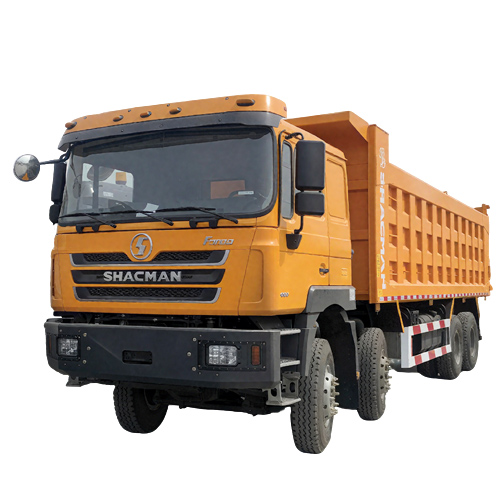
Powertrain Matching Determines Real Hauling Performance
Engine power alone does not guarantee jobsite performance. In real infrastructure work, what matters is how the engine, transmission, axle ratio, and drivetrain work together.
A well-matched powertrain should provide:
- strong low-speed torque
- smooth gear transitions under load
- stable climbing ability
- controlled acceleration on loose surfaces
- reduced drivetrain shock during stop-start cycles
For heavy duty dump trucks, low-speed torque is especially important. Trucks often need to start under load, climb temporary slopes, or move across compacted but uneven haul roads.
Haiyu heavy duty dump trucks should be evaluated based on actual hauling conditions, not only horsepower data. A truck that maintains stable torque delivery under full load will usually perform better than one that only looks strong on paper.
Suspension Stability Affects Safety and Component Life
Suspension is not only about driver comfort. In heavy duty dump trucks, the suspension system plays a direct role in load stability, tire contact, chassis protection, and operational safety.
A good suspension system helps:
- absorb impact from rough haul roads
- reduce vibration transfer to the chassis
- maintain tire contact on uneven ground
- improve control during turning and braking
- protect drivetrain and frame components
In infrastructure projects, road conditions often change as construction progresses. A truck may operate on compacted road base in the morning and rough excavation routes in the afternoon. This requires suspension performance that can handle variable ground conditions without compromising stability.
Payload Efficiency Should Be Evaluated Practically
Maximum payload is important, but it should not be the only selection criterion. In engineering projects, effective payload depends on how safely and consistently the truck can transport materials across repeated cycles.
The practical payload performance of a heavy duty dump truck is influenced by:
| Evaluation Factor | Professional Impact |
|---|---|
| Chassis strength | Determines structural load resistance |
| Axle configuration | Affects weight distribution and traction |
| Suspension design | Influences stability under load |
| Engine torque | Supports movement under full payload |
| Brake performance | Ensures safe stopping distance |
| Hydraulic system | Affects unloading efficiency |
For contractors, the best truck is not always the one with the highest rated capacity. It is the one that delivers stable and repeatable hauling performance under real working conditions.
Hydraulic System Reliability Directly Affects Cycle Efficiency
The hydraulic system controls the lifting and lowering of the dump body. In large infrastructure projects, dumping cycles may happen repeatedly throughout the day. Any delay in lifting speed, instability during unloading, or hydraulic leakage can reduce total site productivity.
A reliable hydraulic system should offer:
- stable lifting force
- smooth body movement
- controlled lowering speed
- pressure resistance under full load
- strong sealing performance
- easy inspection and maintenance access
For Haiyu dump trucks used in aggregate transport, earthmoving, or road base delivery, hydraulic reliability is a key factor in maintaining efficient material flow on site.
Brake System Performance Is Critical Under Full Load
Heavy duty dump trucks often operate under full payload on temporary roads, slopes, and congested work zones. Under these conditions, braking performance becomes a core safety factor.
A professional brake system should provide:
- consistent stopping force
- heat resistance during repeated braking
- stable performance under full load
- compatibility with axle and suspension layout
- reliable response in downhill operation
Poor braking performance increases site safety risk and may reduce operator confidence. For infrastructure contractors, brake system reliability should be evaluated together with payload, terrain, and haul distance.
Cooling and Filtration Matter in Harsh Working Environments
Infrastructure projects often involve dust, heat, long working hours, and heavy engine load. These conditions place continuous pressure on cooling and filtration systems.
Important areas include:
- radiator cooling capacity
- airflow design
- engine air filtration
- hydraulic oil temperature control
- transmission heat management
When operating in dusty environments, filtration quality directly affects engine life. When operating under continuous load, cooling capacity affects power stability and long-term reliability.
A heavy duty dump truck designed for infrastructure work must maintain stable thermal performance throughout long duty cycles.
Maintenance Accessibility Reduces Downtime
From a fleet management perspective, maintenance accessibility is a practical but often underestimated factor.
A truck may have strong specifications, but if daily inspection and routine maintenance are difficult, downtime risk increases.
Professional fleet managers usually pay attention to:
- access to engine service points
- hydraulic hose inspection convenience
- brake system maintenance access
- suspension inspection visibility
- spare parts compatibility
- standardization across fleet units
For Haiyu heavy duty dump trucks, easy inspection and maintenance support can help contractors maintain better fleet availability during long infrastructure projects.

Application Scenarios for Haiyu Heavy Duty Dump Trucks
Haiyu heavy duty dump trucks can be positioned for multiple infrastructure-related applications.
Road and Highway Construction
These projects require stable aggregate transport, subgrade material hauling, and frequent short-cycle transportation.
Quarry and Aggregate Supply
Quarry work demands strong chassis structure, durable body materials, and stable traction on rough roads.
Industrial Park Development
Large site preparation projects require reliable earthmoving and bulk material transport.
Port and Yard Construction
These environments may involve soft ground, reclaimed land, and heavy material movement.
Water Conservancy and Dam Projects
Such projects often involve slopes, uneven routes, and dense material transport.
Each application places different demands on truck configuration, which is why vehicle selection should be based on real working conditions.
How Contractors Should Evaluate a Heavy Duty Dump Truck
Before selecting a dump truck for infrastructure work, contractors should review more than basic specifications.
A professional evaluation should include:
- working road condition
- average haul distance
- material density
- slope gradient
- loading equipment type
- expected daily cycle frequency
- maintenance support conditions
- operator skill level
This practical evaluation helps avoid mismatched equipment and improves long-term project efficiency.
Conclusion
Infrastructure construction requires heavy duty dump trucks that can perform reliably under real site pressure. Chassis strength, powertrain matching, suspension stability, hydraulic performance, braking safety, cooling capacity, and maintenance accessibility all determine whether a truck can support long-term project efficiency.
Haiyu heavy duty dump trucks can be positioned as practical hauling solutions for contractors who need dependable performance in road construction, quarry transport, earthmoving, and large infrastructure development. For professional buyers, the right truck is not simply the one with the highest specifications, but the one that matches the real working conditions of the project.
FAQ
What makes Haiyu heavy duty dump trucks suitable for infrastructure projects?
Haiyu heavy duty dump trucks are suitable for infrastructure work because they focus on chassis strength, load stability, hydraulic reliability, and practical hauling performance.
Why is chassis strength important in heavy duty dump trucks?
Chassis strength affects load-bearing capacity, structural durability, and long-term stability under repeated heavy-load cycles.
How does suspension affect dump truck performance?
Suspension improves load stability, tire contact, driving control, and protection of the chassis and drivetrain.
What should contractors evaluate before choosing a dump truck?
Contractors should evaluate road conditions, material density, haul distance, slope gradient, payload needs, and maintenance support.
Why is hydraulic reliability important for infrastructure hauling?
Hydraulic reliability affects unloading speed, dumping stability, and overall material transport efficiency on construction sites.