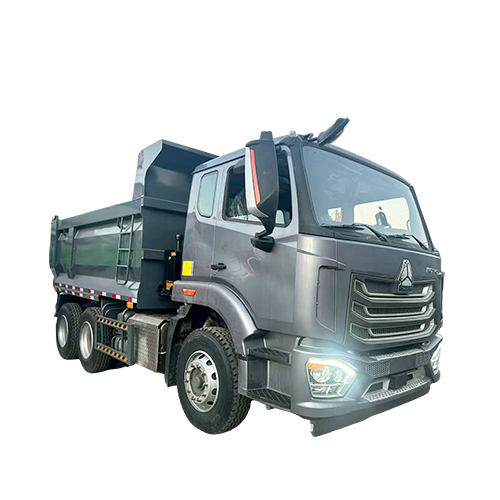
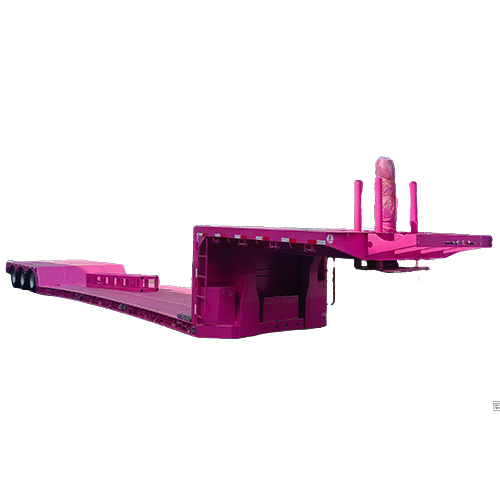
For most buyers, the safest purchasing process is to provide the machine model, operating weight, overall dimensions, track or wheel spacing, destination country and tractor specifications before requesting a final trailer drawing.
Low Bed Trailer Selection at a Glance
| Buyer Question | Practical Answer |
|---|---|
| What is a low bed trailer used for? | Transporting tall, heavy or oversized construction, mining, agricultural and industrial equipment. |
| What information determines the correct model? | Cargo weight, length, width, height, contact area, center of gravity, route regulations and loading method. |
| How many axles are required? | Two, three, four or more axles may be used, but the correct number depends on legal axle loads, weight distribution and road conditions. |
| Which loading system should be selected? | Mechanical ramps, hydraulic ramps or a detachable gooseneck should be selected according to machine ground clearance and loading frequency. |
| Does the advertised payload equal the legal payload? | No. Structural capacity and legally permitted road payload are different and must be checked separately. |
Table of Contents
- What Is a Low Bed Trailer?
- Low Bed Trailer vs Flatbed Trailer
- Main Types of Low Bed Trailers
- Low Bed Trailer Dimensions
- How to Calculate Low Bed Trailer Capacity
- How Many Axles Do You Need?
- Ramp and Loading System Selection
- Tractor and Trailer Compatibility
- Applications and Cargo Matching
- Low Bed Trailer Buyer Checklist
- Safety and Regulatory Requirements
- What Affects Low Bed Trailer Price?
- Frequently Asked Questions
What Is a Low Bed Trailer?
A low bed trailer is a type of semi-trailer with a loading deck positioned lower than the deck of a standard flatbed trailer. The lowered deck helps reduce the loaded center of gravity and the total transport height, making the trailer suitable for tall and heavy equipment.
The terms low bed trailer, lowboy trailer and low loader trailer are often used for similar products in different markets. However, these names do not always describe exactly the same structure. A buyer should compare the technical drawing, deck height, gooseneck design, axle arrangement and loading method instead of relying only on the product name.
Low bed trailers are commonly used to transport:
- Excavators and backhoe loaders
- Bulldozers and graders
- Wheel loaders and road rollers
- Pavers and drilling machines
- Agricultural tractors and harvesters
- Crane components and industrial equipment
- Transformers, generators and other concentrated loads
Buyers can review Haiyu’s low flatbed semi-trailer or browse the complete semi-trailer product range before requesting a customized configuration.
Low Bed Trailer vs Flatbed Trailer
A low bed trailer and a standard flatbed trailer are both open-deck transport vehicles, but they are designed for different cargo profiles.
| Comparison | Low Bed Trailer | Standard Flatbed Trailer |
|---|---|---|
| Main application | Tall, heavy and oversized equipment | Steel, pipes, timber, pallets, containers and general cargo |
| Deck position | Lower main loading deck | Higher, continuous loading platform |
| Typical loading method | Rear ramps or detachable gooseneck | Crane, forklift or side loading |
| Frame design priority | Heavy loads, concentrated loads and lower deck height | General cargo flexibility and deck space |
| Best choice for an excavator | Usually the more suitable option | Only suitable when height, weight and loading conditions allow |
A low bed trailer is not automatically better for every shipment. A standard flatbed semi-trailer may be more economical for general cargo that does not require a low loading height or drive-on ramps.
Main Types of Low Bed Trailers
1. Fixed-Gooseneck Low Bed Trailer
A fixed-gooseneck model normally uses rear ramps for loading. Its structure is relatively simple, durable and easier to maintain, making it suitable for construction companies and equipment fleets that frequently transport excavators, loaders and bulldozers.
The main limitation is the loading angle. Buyers must confirm that the ramp length and approach angle are suitable for the machine’s ground clearance, track length and breakover angle.
2. Detachable-Gooseneck Low Bed Trailer
A detachable-gooseneck trailer allows equipment to be loaded from the front after the gooseneck is disconnected or lowered. This design can provide a lower loading angle and may be more suitable for machines with limited ground clearance.
Detachable systems may be mechanical or hydraulic. They can improve loading efficiency, but they also add structural complexity, weight, maintenance requirements and cost.
3. Extendable Low Bed Trailer
An extendable low bed trailer has a telescopic loading deck for long cargo such as crane components, steel structures, long machinery and selected energy-sector equipment.
When evaluating an extendable trailer, buyers should verify:
- Closed and extended deck length
- Structural capacity in both positions
- Locking mechanism
- Axle load distribution after extension
- Turning radius and route restrictions
4. Multi-Axle Low Bed Trailer
Four-axle and multi-axle low bed trailers are used when a heavier load must be distributed across additional axles. Extra axles can help manage axle loading, but they do not automatically make a shipment legally compliant.
Axle spacing, tire capacity, suspension equalization, tractor load, bridge restrictions and local permit rules must also be considered.
What Are the Standard Low Bed Trailer Dimensions?
There is no single universal low bed trailer dimension. Deck dimensions vary according to cargo, country regulations, axle configuration, gooseneck structure and loading method. Therefore, buyers should request a dimensioned drawing instead of purchasing from a short product description.
| Dimension to Confirm | Why It Matters |
|---|---|
| Overall trailer length | Affects turning, shipping, parking and legal road length. |
| Main deck length | Must support the machine’s contact length and load position. |
| Deck width | Must match track or wheel width and any removable attachments. |
| Deck height | Directly affects total loaded height and center of gravity. |
| Gooseneck length and height | Affects tractor clearance, fifth-wheel matching and load placement. |
| Ramp length and angle | Determines whether equipment can be loaded without grounding. |
| Axle spacing | Affects legal axle loading, bridge calculations and maneuverability. |
| Ground clearance | Must be suitable for roads, construction sites, ramps and ferry terminals. |
| Turning envelope | Helps determine whether the trailer can operate on the planned route. |
For an initial height estimate, buyers can compare the trailer deck height with the cargo height. However, the final transport height should be calculated from the approved drawing and the actual loaded condition.
Outriggers or removable side extensions may increase usable deck width, but the resulting loaded width can still require an oversized transport permit.
How Is Low Bed Trailer Capacity Calculated?
A low bed trailer has at least three different capacity concepts:
Structural Payload
Structural payload is the load that the trailer frame, deck, axles, suspension, tires and related components are designed to support under specified conditions.
Legal Road Payload
Legal payload is the amount of cargo that can be transported under the applicable gross vehicle weight, axle-load, bridge, dimension and permit rules.
Operational Payload
Operational payload is the load that can be transported safely on the actual route, considering road quality, gradients, turning space, climate, maintenance conditions and tractor performance.
A simplified starting formula is:
Allowable cargo weight = permitted combination weight − tractor tare weight − trailer tare weight − fuel, tools, accessories and other carried equipment.
This calculation is only a starting point. Individual axle or axle-group limits may reduce the usable cargo capacity even when the total combination weight appears acceptable.
In the United States, the Federal Highway Administration explains that gross weight, individual axle weight, axle-group weight, axle spacing and the Federal Bridge Formula can all affect legal operation. Buyers and operators should check the applicable FHWA oversize and overweight permit information and the rules of each operating state.
Why Concentrated Load Matters
Two machines with the same total weight may apply very different loads to a trailer deck. An excavator can place a large percentage of its weight through a limited track contact area, while a wheeled machine distributes its weight through several tires.
For this reason, a supplier should know:
- Machine operating weight
- Track or wheel contact length
- Track or wheel spacing
- Front and rear axle weights, if available
- Center-of-gravity location, if available
- Position of attachments during transport
Commercial descriptions such as “60-ton low bed trailer” or “100-ton lowboy trailer” should therefore be treated as preliminary product categories, not as complete engineering specifications. Buyers should also confirm whether “ton” means a metric tonne or another unit.
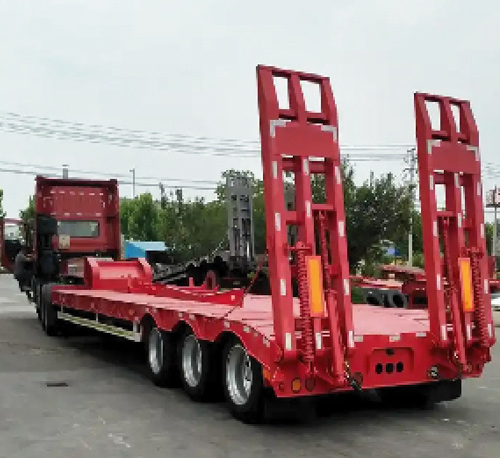
How Many Axles Does a Low Bed Trailer Need?
| Axle Configuration | Typical Selection Logic | Points to Check |
|---|---|---|
| 2 axles | Lighter equipment, compact trailers and routes where maneuverability is important. | Legal axle load, tire rating, deck load and tractor vertical load. |
| 3 axles | A common general-purpose configuration for construction machinery transport. | Axle spacing, suspension type, machine position and local road limits. |
| 4 axles | Heavier cargo or projects requiring the load to be distributed over more axles. | Turning resistance, tire wear, route geometry and equal load distribution. |
| More than 4 axles | Specialized heavy-haul projects and cargo requiring detailed axle-load planning. | Steering requirements, hydraulic equalization, permits, bridges and escort requirements. |
More axles do not always mean more legal payload. Adding axles can also increase trailer tare weight, tire scrub, turning difficulty, maintenance cost and shipping cost.
The final axle configuration should be selected after calculating the loaded tractor axles, kingpin load and trailer axle-group loads.
Mechanical Ramps, Hydraulic Ramps or Detachable Gooseneck?
| Loading System | Main Advantages | Main Considerations |
|---|---|---|
| Mechanical ramps | Simple construction, lower cost and easier field maintenance. | May require more manual effort and may provide a steeper loading angle. |
| Spring-assisted ramps | Reduce manual lifting effort without a complete hydraulic system. | Spring condition and ramp balance require regular inspection. |
| Hydraulic ramps | Faster operation and easier handling for frequent loading. | Require cylinders, hoses, controls and a suitable power source. |
| Detachable gooseneck | Provides front loading and can reduce the loading angle. | Higher complexity, tare weight, purchase cost and maintenance demand. |
The correct ramp is determined by more than machine weight. Track traction, tire condition, machine ground clearance, ramp surface, weather and loading-site slope should also be evaluated.
Suspension, Tires, Brakes and Electrical System
Mechanical Suspension
Mechanical leaf-spring suspension is often selected for rough roads, construction sites and markets where simple maintenance and spare-part availability are priorities.
Air Suspension
Air suspension may improve ride characteristics and provide height-control functions, but it requires a suitable air system, trained maintenance and reliable replacement parts.
Hydraulic or Equalizing Suspension
Special heavy-haul trailers may use hydraulic or other equalizing systems to distribute load between axle lines. These configurations require more detailed engineering and operator training.
Tires and Rims
Tire selection should consider tire load rating, operating speed, road temperature, terrain, local availability and rim compatibility. The lowest-rated component in the axle, suspension, wheel and tire system can limit usable capacity.
Braking and Electrical Requirements
Buyers should confirm:
- Brake type and brake-chamber specification
- ABS or EBS requirements in the destination market
- Air-line and electrical connectors
- Lighting voltage and lamp arrangement
- Side-marker and reflective-marking requirements
- Parking-brake and emergency-brake functions
How to Match a Low Bed Trailer With a Tractor Truck
A suitable trailer can still perform poorly when it is connected to an incompatible tractor. The following information should be checked before production:
- Tractor drive configuration, such as 4×2, 6×4 or 6×6
- Fifth-wheel height
- Kingpin standard and position
- Maximum permitted fifth-wheel vertical load
- Tractor wheelbase and turning clearance
- Engine power and transmission ratios
- Retarder or auxiliary braking requirements
- Air and electrical connection standards
- Tire size and chassis height
An incorrect fifth-wheel height can change the trailer deck angle and load distribution. It may also reduce ground clearance or place excessive load on one axle group.
Low Bed Trailer Applications and Required Cargo Data
| Cargo | Information the Buyer Should Provide | Main Trailer Design Concern |
|---|---|---|
| Excavator | Operating weight, overall dimensions, track length, track spacing, boom and bucket position. | Concentrated track load, ramp angle and tie-down locations. |
| Bulldozer | Operating weight, blade width, track dimensions and whether the blade can be removed. | Loaded width, deck strength and track contact pressure. |
| Wheel loader | Total weight, front and rear axle weights, tire size and overall height. | Axle load concentration, ramp traction and loaded height. |
| Road roller or paver | Operating weight, drum or track width, ground clearance and attachment dimensions. | Ramp transition, concentrated contact area and deck surface. |
| Agricultural machine | Wheel width, overall width, height, weight and removable components. | Oversized width, deck extensions and route permits. |
| Industrial equipment | Weight, lifting points, base dimensions, center of gravity and support requirements. | Point loads, support beams, tie-down design and loading plan. |
| Long equipment | Overall length, support positions, weight distribution and overhang. | Extendable deck, bending load, turning radius and route clearance. |
Haiyu also supplies different categories of engineering machinery, which can help buyers identify the machine information needed when matching equipment with a transport trailer.
Low Bed Trailer Buyer Checklist
Step 1: Collect Complete Cargo Information
Record the exact machine model, operating weight, length, width, height, track or wheel dimensions and transport position. Do not use an estimated “approximately 50 tons” description when an official machine specification is available.
Step 2: Identify the Destination and Operating Route
Provide the destination country, expected road type, construction-site conditions, maximum gradients, bridge restrictions and any port or ferry requirements.
Step 3: Confirm the Loading Method
Decide whether the machine will drive onto the trailer from the rear, load from the front through a detachable gooseneck or be lifted by a crane.
Step 4: Determine Legal and Structural Capacity
Calculate the complete combination weight and axle loads. Confirm that the structural design is suitable for both total load and concentrated load.
Step 5: Match the Tractor
Provide the tractor model, fifth-wheel height, drive configuration, kingpin standard and permitted fifth-wheel load.
Step 6: Review a Dimensioned Technical Drawing
The approved drawing should show the main dimensions, axle positions, ramp dimensions, kingpin position, suspension, tires, braking system and major structural sections.
Step 7: Confirm Component Specifications
Ask the supplier to identify the axle, suspension, tire, landing-gear, brake, hydraulic and electrical specifications in the quotation or contract.
Step 8: Agree on Inspection and Documentation
Before production is completed, confirm which inspection records, test photos, serial numbers, shipping marks and export documents will be provided.
What Should Be Inspected Before Shipment?
- Overall dimensions compared with the approved drawing
- Trailer tare weight, when a verified weighing record is available
- Main-beam, cross-member and deck construction
- Critical weld appearance and agreed inspection records
- Axle, suspension, tire and rim specifications
- Brake, light and electrical functions
- Hydraulic-cylinder, hose and control operation
- Ramp movement and locking devices
- Kingpin, landing gear and fifth-wheel interface
- Tie-down points and accessory storage
- Surface preparation, paint coverage and corrosion protection
- VIN, nameplate and required export documents
Photographs are useful, but they should not replace the approved drawing, component list and agreed inspection records. Buyers can learn more about the supplier through the Haiyu company profile.
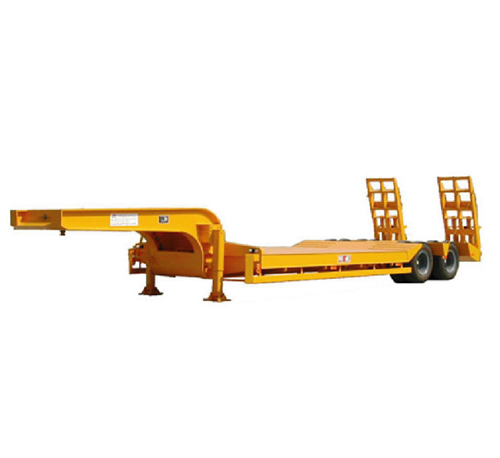
Low Bed Trailer Safety and Regulatory Requirements
Trailer capacity does not replace route approval or a cargo-securement plan. Operators must follow the rules that apply in the country, state, province or municipality where the combination will operate.
For U.S. interstate transport, the Federal Motor Carrier Safety Administration applies commodity-specific securement requirements to wheeled or tracked heavy equipment weighing 4,536 kg—or 10,000 lb—or more. Buyers and operators can review the official FMCSA cargo securement rules.
The Federal Highway Administration also maintains information on oversize and overweight permits. In the European Union, buyers should review the European Commission’s official information on commercial-vehicle weights and dimensions.
Before every trip, the operator should verify:
- Total combination weight and individual axle loads
- Required route and oversized-load permits
- Bridge, tunnel, overhead-line and turning clearances
- Condition and rating of chains, binders and other restraints
- Condition of anchor points, ramps and locking devices
- Restraint of articulated parts, attachments and accessories
- Tire pressure, brakes, lights and suspension condition
- Whether the load remains secure after initial movement and during required inspections
Local regulations and qualified transport professionals should always take priority over general online guidance.
What Affects the Price of a Low Bed Trailer?
Low bed trailer prices vary because two trailers with a similar advertised payload may use very different structures and components. The main cost factors include:
- Required structural payload and concentrated-load design
- Number and specification of axles
- Main-beam and cross-member structure
- Fixed, detachable or extendable gooseneck
- Mechanical, spring-assisted or hydraulic ramps
- Mechanical, air or specialized suspension
- Tire, brake and electrical-system requirements
- ABS, EBS or destination-market compliance requirements
- Outriggers, deck extensions, winches and toolboxes
- Surface treatment and corrosion-protection system
- Inspection, testing and documentation requirements
- Ocean shipping method and destination port
A professional quotation should clearly separate the base trailer configuration, optional equipment, spare parts, shipping terms and excluded items. Buyers should be cautious when a quotation does not state the trailer dimensions, tare weight, component specifications or loading assumptions.
Information to Include in a Low Bed Trailer RFQ
To receive a more accurate recommendation and quotation, send the following information:
- Cargo or machine: brand and model
- Operating weight: exact value and unit
- Overall dimensions: length × width × height
- Contact dimensions: track length and spacing, or wheel and axle data
- Destination: country and port
- Operating conditions: highway, mine, construction site or mixed roads
- Loading frequency: occasional or frequent
- Preferred loading method: mechanical ramp, hydraulic ramp or detachable gooseneck
- Tractor information: model, drive configuration and fifth-wheel height
- Special requirements: ABS, EBS, suspension, tires, paint, spare parts or certification
Send these details through the Haiyu contact page to request a recommended axle configuration, technical drawing and quotation.
Frequently Asked Questions
What is the main purpose of a low bed trailer?
A low bed trailer is primarily used to transport tall, heavy or oversized machinery. Its lowered deck can reduce total loaded height and improve stability compared with a higher standard platform.
Is a low bed trailer the same as a lowboy trailer?
The terms are often used for similar heavy-equipment trailers, but their exact meaning varies between regions and manufacturers. Buyers should compare the deck structure, loading method, axle configuration and technical drawing.
What are standard low bed trailer dimensions?
There is no single worldwide standard. Deck length, width, height, gooseneck dimensions, axle spacing and ramp size should be selected according to the cargo and destination-market regulations.
How much weight can a low bed trailer carry?
Capacity depends on frame design, axles, suspension, tires, concentrated load and local road laws. The advertised structural payload may be higher than the legally permitted road payload.
Is a three-axle low bed trailer suitable for an excavator?
A three-axle configuration is commonly used for construction machinery, but suitability cannot be confirmed from axle count alone. The excavator’s operating weight, track contact area, overall dimensions and route limits must be calculated.
Are hydraulic ramps better than mechanical ramps?
Hydraulic ramps are easier and faster to operate when equipment is loaded frequently. Mechanical ramps are simpler and may be easier to maintain in remote areas. The better option depends on loading frequency, maintenance capability and budget.
Does a low bed trailer always require an oversized-load permit?
No. Permit requirements depend on the complete loaded width, height, length, gross weight, axle loads and operating route. A low deck may reduce overall height, but it does not guarantee that the load falls within normal legal limits.
What information is required before ordering?
At minimum, provide the machine model, operating weight, overall dimensions, track or wheel spacing, destination country, road conditions, loading method and tractor specifications.
Conclusion
The best low bed trailer is not simply the model with the largest advertised payload. It is the trailer whose structure, dimensions, axles, ramps, suspension, tires and braking system have been verified against the actual cargo, tractor, route and local regulations.
Before placing an order, request a complete technical drawing and confirm structural capacity, legal axle loads, concentrated-load support, loading angle and tractor compatibility.
Need a low bed trailer configuration for an excavator, bulldozer, loader or industrial machine? Contact Haiyu and send the machine model, operating weight, dimensions and destination country to request a suitable configuration and quotation.
Authoritative External References
- Federal Motor Carrier Safety Administration: Cargo Securement Rules
- Federal Highway Administration: Oversize and Overweight Load Permits
- European Commission: Commercial Vehicle Weights and Dimensions
Technical note: Final trailer dimensions, tare weight, structural capacity, legal payload and axle loads must be confirmed through the approved technical drawing, destination-market regulations and actual operating conditions.