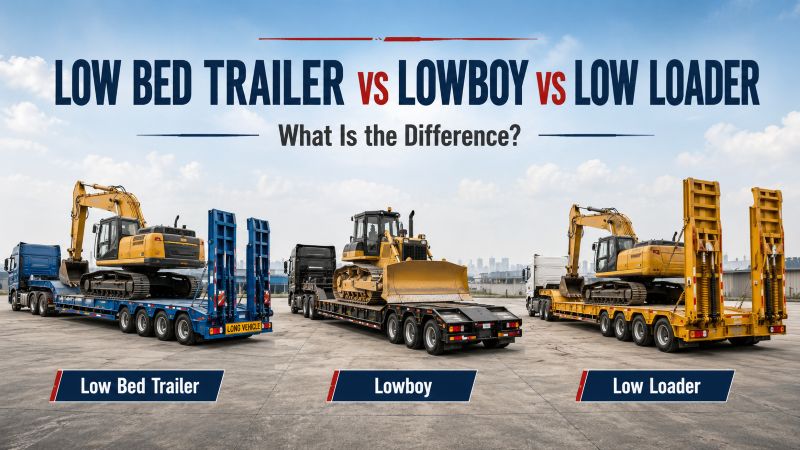
A low bed trailer, lowboy trailer and low loader trailer usually belong to the same broad family of low-deck trailers used to transport excavators, bulldozers, loaders and other tall or heavy equipment. The most important difference is often regional terminology: “lowboy” is widely used in North America, “low loader” is common in the United Kingdom, and “low bed” or “lowbed” is frequently used in international trailer markets.
However, these terms are not controlled by one universal naming standard. Some suppliers use “lowboy” only for a double-drop trailer, while others use it for both fixed-gooseneck and removable-gooseneck models. Buyers should therefore compare the technical drawing, deck structure, gooseneck, loading method, axle arrangement and rated capacity instead of purchasing by product name alone.
This article explains the terminology and helps international buyers describe the correct trailer when requesting a quotation from Haiyu.
Low Bed Trailer vs Lowboy vs Low Loader
| Term | Where It Is Commonly Used | What It Usually Describes | Important Limitation |
|---|---|---|---|
| Lowboy trailer | United States and North America | A low-deck or double-drop semi-trailer for tall and heavy equipment | May have a fixed or removable gooseneck depending on the supplier |
| Low loader trailer | United Kingdom and some European, African and Commonwealth markets | A low-platform trailer or semi-trailer used for construction equipment and abnormal loads | The term may include several trailer structures and loading systems |
| Low bed trailer | International export markets, including Asia, Africa and the Middle East | A low-deck semi-trailer, usually designed for machinery and heavy equipment | Deck height and structure vary significantly between manufacturers |
| Lowbed trailer | International manufacturing and export documentation | The same general category as a low bed trailer | “Lowbed” and “low bed” are mainly spelling variations |
| RGN trailer | North American heavy-haul market | A removable-gooseneck lowboy that allows front loading | RGN describes the gooseneck system, not every lowboy trailer |
| Double-drop trailer | Freight and transport industries | A trailer with a deck that drops behind the gooseneck and rises before the rear axles | Describes deck geometry rather than a regional product name |
Table of Contents
- Are Low Bed, Lowboy and Low Loader Trailers the Same?
- Why Do the Names Differ?
- What Is a Low Bed Trailer?
- What Is a Lowboy Trailer?
- What Is a Low Loader Trailer?
- RGN Trailer vs Lowboy Trailer
- What Actually Determines the Trailer Type?
- Detailed Comparison Table
- Which Trailer Is Suitable for Your Cargo?
- Which Name Should You Use in Your Market?
- Information to Include in Your RFQ
- Common Buying Mistakes
- Safety and Regulatory Considerations
- Frequently Asked Questions
Are Low Bed, Lowboy and Low Loader Trailers the Same?
In general, yes—but not always in exact technical specifications.
All three names commonly describe trailers with a loading deck lower than that of a standard flatbed trailer. The low deck is designed to reduce total loaded height and improve stability when transporting tall or heavy machinery.
The trailers may be used for similar cargo, including:
- Excavators
- Bulldozers
- Wheel loaders
- Motor graders
- Road rollers
- Pavers
- Drilling machines
- Agricultural machinery
- Industrial equipment
- Transformers and generators
The problem is that different manufacturers, freight companies and countries may use the same term for different configurations.
For example, one supplier may call a fixed-gooseneck trailer with rear ramps a lowboy. Another may use “lowboy” as a general category that also includes removable-gooseneck trailers. A third supplier may advertise the same basic structure as a low bed semi-trailer.
Therefore, the name identifies a general trailer family, but it does not provide enough information to place an order.
For a broader explanation of dimensions, capacity, axle selection and loading systems, read Haiyu’s Low Bed Trailer Buyer’s Guide.
Why Do the Names Differ?
1. Regional English
Different English-speaking markets developed different names for similar heavy-haul equipment.
- Lowboy is widely recognized in the United States and North America.
- Low loader is commonly used in British English.
- Low bed and lowbed are widely used in international trade, particularly by manufacturers and buyers in Asia, Africa and the Middle East.
- Float may also be used in Australia for certain machinery-transport trailers.
Official British vehicle guidance uses the term “low loader trailer” when describing certain articulated vehicle configurations. Buyers operating in Great Britain can review the official GOV.UK vehicle-length guidance.
2. Manufacturer Naming Conventions
Trailer manufacturers sometimes use names according to their own product catalogues rather than a globally standardized classification system.
For example, a manufacturer may separate products into:
- Standard low bed trailer
- Heavy-duty lowboy trailer
- Hydraulic detachable-gooseneck trailer
- Extendable low loader
- Multi-axle lowbed trailer
These names can be useful for marketing, but the actual technical drawing should remain the primary purchasing document.
3. Translation Between Languages
International buyers and suppliers may translate one local product name into several English terms. For example, the same trailer can appear in documents as a low bed, low platform, low loader, lowboy or heavy-equipment semi-trailer.
Translation can create misunderstandings when the quotation does not contain a drawing or complete specification.
4. Different Trailer Structures Within the Same Category
The low-deck trailer family includes several structures. Two trailers may be advertised under the same name while having different:
- Gooseneck systems
- Deck profiles
- Loading directions
- Axle quantities
- Suspension systems
- Ground clearances
- Payload ratings
This is why buyers should define the required structure, not only the preferred product name.
What Is a Low Bed Trailer?
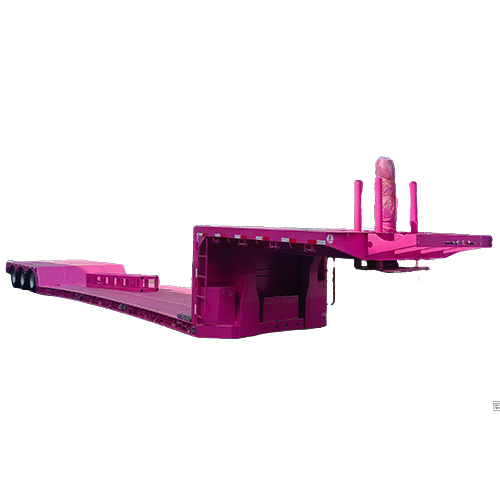
A low bed trailer is a semi-trailer with a lowered loading platform designed primarily for tall, heavy or oversized cargo. In international export markets, “low bed trailer” is often used as the broad product-category name.
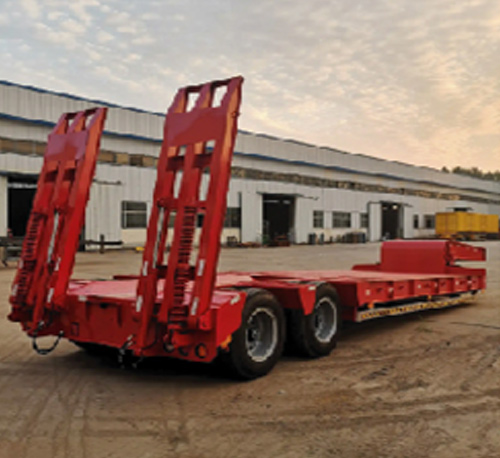
A typical low bed configuration may include:
- A fixed gooseneck connected to the tractor
- A lowered main loading deck
- Rear wheel and axle section
- Mechanical, spring-assisted or hydraulic rear ramps
- Two, three, four or more axles
- Mechanical, air or specialized suspension
However, “low bed” does not always mean fixed gooseneck. Some manufacturers also describe detachable-gooseneck and extendable models as low bed trailers.
When Is the Term “Low Bed Trailer” Most Useful?
The term is useful when communicating with:
- International semi-trailer manufacturers
- African construction and mining companies
- Middle Eastern transport contractors
- Asian vehicle distributors
- International freight and project-cargo buyers
Buyers can review Haiyu’s low flatbed semi-trailer and other models in the Haiyu semi-trailer range.
What Is a Lowboy Trailer?
A lowboy trailer is the North American term commonly used for a low-deck semi-trailer designed to carry tall and heavy equipment.
Many lowboy trailers have a double-drop or deep-well deck. The deck drops behind the gooseneck and rises again before the rear wheel area. This creates a low central platform for the cargo.
The main advantages of this design are:
- Reduced total loaded height
- Lower cargo center of gravity
- Improved suitability for tall construction machinery
- Additional vertical clearance under bridges and other structures
The United States Federal Highway Administration uses the terms “deep-well” and “low-boy chassis” when discussing vehicles designed to gain vertical clearance for oversized loads. The same guidance warns that very low trailers can have insufficient ground clearance at railroad crossings and other changes in road grade. Buyers and operators can review the FHWA oversize-load guidance.
Does a Lowboy Always Have a Removable Gooseneck?
No. A lowboy may have:
- A fixed gooseneck
- A mechanical detachable gooseneck
- A hydraulic removable gooseneck
In some parts of the transport industry, “lowboy” refers to the entire low-deck trailer family. In other contexts, carriers distinguish between a fixed-neck lowboy and an RGN trailer.
Because both usages exist, the buyer should explicitly state whether a detachable gooseneck is required.
What Is a Low Loader Trailer?
A low loader trailer is the British English term for a low-deck trailer designed to transport heavy plant, machinery and abnormal loads.
The term can describe:
- A low loader semi-trailer connected by a fifth wheel
- A fixed-neck low loader with rear ramps
- A detachable-neck low loader
- An extendable low loader
- A multi-axle heavy-haul trailer
- In some markets, a drawbar machinery trailer
This means the phrase “low loader” can be broader than one specific semi-trailer structure.
Low Loader Is Not Automatically a Different Product
A buyer in the United Kingdom may call a machine-transport trailer a low loader, while a buyer in the United States may call a very similar configuration a lowboy. A manufacturer serving Africa or the Middle East may list the same general product as a low bed semi-trailer.
The regional name may change, but the purchasing questions remain the same:
- What cargo will be transported?
- What is the actual cargo weight?
- What are the cargo dimensions?
- How will the cargo be loaded?
- What is the required deck height?
- How many axles are needed?
- What regulations apply in the destination country?
RGN Trailer vs Lowboy Trailer
An RGN is normally a type of lowboy trailer, not a completely unrelated trailer category.
RGN stands for removable gooseneck. The front gooseneck can be detached so that the main deck can approach or rest near ground level. Self-propelled machinery can then drive onto the trailer from the front.
| Comparison | Fixed-Gooseneck Lowboy | RGN Lowboy |
|---|---|---|
| Gooseneck | Permanently connected to the trailer frame | Can be removed or detached |
| Main loading direction | Usually rear loading or crane loading | Front loading after gooseneck removal |
| Loading equipment | Rear ramps, crane or other lifting equipment | Machine can often drive directly onto the lowered deck |
| Mechanical complexity | Generally simpler | Generally more complex |
| Maintenance requirements | Usually lower | Additional detachable or hydraulic components require inspection |
| Typical purchasing cost | Generally lower for a comparable basic configuration | Generally higher because of the detachable system |
| Best suited to | Equipment that can use rear ramps or be crane-loaded | Frequent transport of self-propelled equipment requiring a low loading angle |
A detachable gooseneck can improve loading convenience, but it is not automatically the best choice for every buyer. A fixed-gooseneck trailer may be more appropriate when simplicity, lower tare weight, easier maintenance and lower purchasing cost are priorities.
What Actually Determines the Trailer Type?
Instead of relying on the regional name, compare the following technical characteristics.
1. Deck Geometry
Confirm whether the trailer has:
- A flat low platform
- A single-drop deck
- A double-drop or deep-well deck
- A recessed beam or wheel-well structure
- A telescopic or extendable loading platform
The deck structure affects cargo height, usable loading length, frame strength and ground clearance.
2. Gooseneck Design
The gooseneck may be:
- Fixed
- Mechanically detachable
- Hydraulically removable
- Folding
- Adjustable for different fifth-wheel heights
The gooseneck system determines how the trailer connects to the tractor and how the cargo is loaded.
3. Loading Method
Possible loading methods include:
- Rear loading over mechanical ramps
- Rear loading over hydraulic ramps
- Front loading through a removable gooseneck
- Side loading by crane
- Vertical loading by crane
The correct method depends on the machine’s ground clearance, traction, weight, dimensions and operating condition.
4. Deck Height and Ground Clearance
A lower deck can reduce total transport height, but it can also reduce ground clearance.
Low ground clearance may create problems at:
- Railroad crossings
- Steep ramps
- Ferry terminals
- Construction-site entrances
- Uneven mine roads
- Road humps and drainage channels
The lowest possible deck is not always the most practical deck for poor road conditions.
5. Axle Configuration
Low-deck trailers may use two, three, four or more axles. The correct configuration depends on:
- Trailer tare weight
- Cargo weight
- Concentrated load
- Axle spacing
- Legal axle limits
- Road and bridge conditions
- Turning requirements
More axles do not automatically create more legal payload. The complete tractor-trailer load distribution must be calculated.
6. Suspension and Steering
The trailer may use mechanical, air, hydraulic or other specialized suspension. Heavy multi-axle models may also require self-steering, forced-steering or hydraulic steering systems.
7. Cargo-Support Structure
A trailer carrying an excavator may need reinforcement under the tracks. A trailer carrying an industrial transformer may need support at specific concentrated-load points. Cargo weight alone is not enough to design the platform.
Low Bed vs Lowboy vs Low Loader: Detailed Comparison
| Factor | Low Bed Trailer | Lowboy Trailer | Low Loader Trailer |
|---|---|---|---|
| Primary difference | International product term | North American product term | British and regional product term |
| Typical cargo | Construction, mining and industrial equipment | Construction, industrial and oversized equipment | Plant, machinery and abnormal loads |
| Deck position | Lower than a standard flatbed | Usually a low or double-drop deck | Lower than a conventional platform trailer |
| Gooseneck | Fixed or detachable | Fixed or removable | Fixed or detachable |
| Loading system | Rear ramps, detachable neck or crane | Rear ramps, RGN front loading or crane | Rear ramps, detachable neck or crane |
| Axle options | Two to multiple axles | Two to multiple axles | Two to multiple axles |
| Does the name define capacity? | No | No | No |
| Does the name define dimensions? | No | No | No |
| Can the terms overlap? | Yes | Yes | Yes |
Lowboy Trailer vs Flatbed Trailer
A lowboy is not the same as a standard flatbed trailer.
| Factor | Lowboy / Low Bed | Standard Flatbed |
|---|---|---|
| Deck height | Lower deck designed for tall or heavy machinery | Higher continuous platform |
| Main cargo | Excavators, bulldozers, loaders and oversized machinery | Steel, pipes, timber, pallets, containers and general cargo |
| Loading method | Ramps, detachable gooseneck or crane | Forklift, crane or side loading |
| Ground clearance | Generally lower | Generally higher |
| Best use | When cargo height, concentrated load or drive-on loading is important | When a long, open and versatile loading platform is required |
For general cargo that does not require a low loading platform, Haiyu’s flatbed semi-trailer may be more suitable.
Lowboy Trailer vs Step Deck Trailer
A step deck trailer has a higher front deck and a lower rear deck, but its lower section normally remains higher than the main well of a dedicated lowboy or deep-well trailer.
A step deck is commonly used for freight that is too tall for a standard flatbed but does not require the extremely low platform or heavy-duty structure of a lowboy.
Choose a step deck when:
- The cargo is moderately tall
- Drive-on loading is not required
- A longer usable freight deck is important
- The cargo does not create severe concentrated loads
Choose a lowboy or low bed trailer when:
- The cargo is very tall
- The cargo is construction or mining machinery
- A lower center of gravity is required
- Rear ramps or front drive-on loading are required
- The platform must support heavy concentrated loads
Which Trailer Is Suitable for Your Cargo?
Excavator
A fixed-neck low bed with suitable rear ramps may be sufficient when the excavator has adequate ground clearance and can safely climb the ramp.
An RGN or detachable-gooseneck design may be preferable when:
- The excavator has limited ground clearance
- A lower loading angle is required
- Equipment is loaded and unloaded frequently
- Rear loading space is limited
Bulldozer
For a bulldozer, check the blade width, track dimensions, ground pressure, total operating weight and whether the blade can be removed for transport.
The trailer may require:
- Deck extensions or outriggers
- Track-area reinforcement
- A low loading angle
- Heavy-duty tie-down points
Wheel Loader
A wheel loader creates significant axle and tire contact loads. The buyer should provide front and rear axle weights when available, as well as tire dimensions and overall transport height.
Road Roller or Paver
Road rollers and pavers may have low ground clearance and concentrated contact areas. Ramp transition angles and deck reinforcement are especially important.
Non-Running Machinery
If the machine cannot drive, a removable gooseneck may not provide a major loading advantage unless a winch or other loading system is included.
Possible solutions include:
- Crane loading
- Trailer-mounted winch
- External recovery equipment
- Hydraulic loading platform
Long Industrial Equipment
Long equipment may require an extendable low bed or low loader. The buyer should provide the complete load-support positions, center of gravity and allowable overhang.
Haiyu’s engineering machinery range can also help buyers identify the machine details required for trailer matching.
Which Name Should You Use in Your Market?
| Target Market | Recommended Primary Term | Additional Term to Include |
|---|---|---|
| United States | Lowboy trailer | RGN or fixed-gooseneck lowboy |
| Canada | Lowboy or low bed trailer | Double-drop or detachable gooseneck |
| United Kingdom | Low loader trailer | Fixed-neck or detachable-neck low loader |
| European Union | Low loader or low bed trailer | Include the required technical standard and dimensions |
| Africa | Low bed or lowbed trailer | Include payload, axle quantity and ramp type |
| Middle East | Low bed trailer | Include deck height, payload and axle configuration |
| Southeast Asia | Low bed or low loader trailer | Include road-condition and ground-clearance requirements |
| Australia | Low loader or float | Include complete configuration and compliance requirements |
Using the familiar regional term can improve communication, but the RFQ should always include a technical description.
For example, instead of writing:
We need one 60-ton lowboy trailer.
Write:
We need a three-axle fixed-gooseneck low bed semi-trailer with hydraulic rear ramps for transporting a 48,000 kg excavator. Please recommend the deck dimensions, axle configuration and structural design based on the attached machine specifications and destination-country regulations.
The second request gives the supplier enough information to begin selecting a suitable configuration.
Information to Include in a Lowboy or Low Bed Trailer RFQ
Cargo Information
- Machine or cargo name
- Manufacturer and model
- Actual operating or transport weight
- Overall length, width and height
- Track or wheel contact dimensions
- Center-of-gravity information, if available
- Position of the boom, bucket, blade or other attachment during transport
Operating Information
- Destination country
- Destination port
- Normal operating route
- Highway, mine, construction-site or mixed-road operation
- Maximum expected road gradient
- Railroad crossings, ferry ramps or other ground-clearance risks
- Loading and unloading frequency
Trailer Configuration
- Fixed or detachable gooseneck
- Mechanical or hydraulic ramps
- Required deck length and width
- Required deck height
- Preferred axle quantity
- Suspension type
- Tire and rim requirements
- Brake and electrical requirements
- ABS or EBS requirements
- Outriggers, winch, toolbox and spare-tire carrier
Tractor Information
- Tractor brand and model
- Drive configuration, such as 4×2, 6×4 or 6×6
- Fifth-wheel height
- Kingpin standard
- Maximum fifth-wheel vertical load
- Air and electrical connections
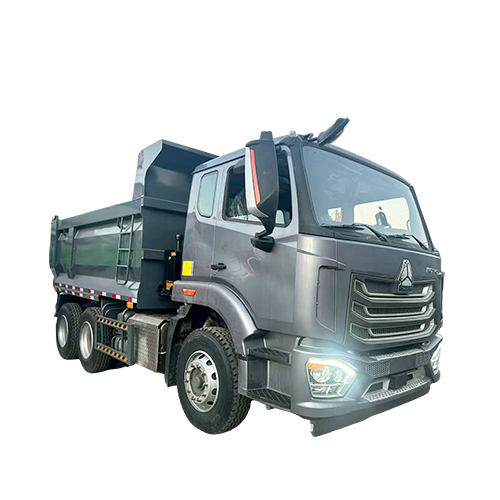
Haiyu also supplies different tractor truck configurations. Tractor and trailer compatibility should be reviewed before the trailer drawing is finalized.
Common Mistakes When Buying a Low Bed, Lowboy or Low Loader
Mistake 1: Buying According to the Product Name
A product called a “60-ton lowboy” may have a very different structure from another trailer with the same name. The buyer should compare drawings, materials, axles, suspension, tires, concentrated-load assumptions and component specifications.
Mistake 2: Assuming Advertised Payload Equals Legal Payload
Structural payload and legal road payload are not the same. Local gross-weight limits, axle limits, bridge formulas and permit conditions may reduce the usable cargo weight.
Mistake 3: Selecting the Lowest Possible Deck
A very low deck helps reduce loaded height but may create insufficient ground clearance for rough roads, railway crossings and steep entrances.
Mistake 4: Assuming Every Lowboy Is an RGN
Some lowboys have removable goosenecks, while others have fixed goosenecks. Specify the required loading method clearly.
Mistake 5: Ignoring Concentrated Load
An excavator, wheel loader and industrial transformer can apply very different forces to the deck even when their total weights are similar.
Mistake 6: Selecting Axles Before Calculating Weight Distribution
The correct number of axles depends on the total combination, kingpin load, axle spacing and destination regulations—not only the cargo weight.
Mistake 7: Forgetting Tractor Compatibility
An unsuitable fifth-wheel height or kingpin position can change deck angle, ground clearance, turning clearance and axle-load distribution.
Mistake 8: Accepting a Quotation Without a Technical Drawing
A complete quotation should be supported by a drawing showing major dimensions, axle positions, gooseneck structure, ramp system and principal components.
Safety and Regulatory Considerations
The name used for the trailer does not determine whether a transport operation is legal or safe. Operators must evaluate the complete loaded vehicle according to the rules of every jurisdiction on the route.
Cargo Securement
In the United States, the Federal Motor Carrier Safety Administration publishes cargo-securement requirements, including commodity-specific rules for heavy vehicles, equipment and machinery. Operators can review the official FMCSA cargo securement rules.
In the United Kingdom, Driver and Vehicle Standards Agency guidance explains that tractor units and trailers transported on low loaders should have their center of gravity kept as low as possible. It also provides guidance on parking brakes, wheel chocks, direct lashings and rated attachment points. See the official GOV.UK load-securement guidance.
Oversize and Overweight Permits
A low deck can reduce total loaded height, but it does not eliminate permit requirements. Permits may still be required because of:
- Overall width
- Overall height
- Overall length
- Gross combination weight
- Individual axle weight
- Axle-group weight
- Cargo overhang
For United States operations, consult the appropriate state authorities and the official FHWA oversize and overweight permit information.
Route Survey
A route survey should consider:
- Bridge height and load limits
- Tunnel clearance
- Railroad crossings
- Road gradients
- Turning radius
- Traffic islands and roundabouts
- Overhead power lines
- Road surface and construction-site access
Very low trailers require particular attention at grade changes and railway crossings because the frame or cargo may contact the road surface.
How Haiyu Helps Buyers Select the Correct Trailer
Haiyu supplies customized low bed semi-trailers and other heavy transport solutions for international customers.
The selection process should begin with the cargo and operating conditions. Based on the information provided, a suitable proposal may include recommendations for:
- Deck structure and dimensions
- Fixed or detachable gooseneck
- Mechanical or hydraulic ramps
- Axle quantity and spacing
- Suspension configuration
- Tire and brake specifications
- Cargo-support reinforcement
- Tie-down points
- Ground clearance
- Tractor compatibility
Buyers can learn more about the company on the About Haiyu page.
To request a technical recommendation, send the machine model, operating weight, dimensions, destination country and tractor information through the Haiyu contact page.
FrAQ
Is a low bed trailer the same as a lowboy trailer?
They usually describe the same broad family of low-deck heavy-equipment trailers. “Lowboy” is more common in North America, while “low bed” is widely used in international manufacturing and export markets. Exact structures still vary between suppliers.
Is a low loader the same as a lowboy?
In many cases, yes. “Low loader” is the British English term commonly used for low-deck machinery trailers, while “lowboy” is more common in North America. Buyers should compare the technical configuration rather than assuming every product is identical.
Is “lowbed” different from “low bed”?
No major technical difference is implied. “Lowbed” and “low bed” are mainly spelling variations used by different manufacturers and markets.
Is an RGN trailer the same as a lowboy trailer?
An RGN is a type of lowboy with a removable gooseneck. Not every lowboy is an RGN because some lowboys have fixed goosenecks and load from the rear or by crane.
What does RGN mean?
RGN means removable gooseneck. The gooseneck can be detached so the front of the trailer deck can be lowered for drive-on loading.
Which term should I use when asking for a quotation?
Use the term common in your market, but also describe the required structure. State whether you need a fixed or detachable gooseneck, rear or front loading, deck dimensions, axle quantity and payload.
Can a lowboy trailer transport an excavator?
Yes. Lowboy and low bed trailers are commonly used for excavators. The correct configuration depends on the excavator’s operating weight, overall dimensions, track contact area, ground clearance and destination regulations.
Is a lowboy trailer a flatbed trailer?
It is an open-deck trailer, but it is not the same as a conventional flatbed. A lowboy has a lower deck designed for tall and heavy machinery, while a standard flatbed has a higher continuous platform for general cargo.
Are lowboy trailer dimensions standardized?
No single dimension applies worldwide. Deck length, width, height, gooseneck, axle spacing and ramp dimensions vary according to cargo, manufacturer, country and operating conditions.
Which is better: a fixed lowboy or an RGN?
A fixed-gooseneck lowboy is generally simpler and may cost less to purchase and maintain. An RGN provides more convenient front loading and a lower loading angle. The better option depends on the cargo and loading frequency.
Does a lowboy trailer always need a permit?
No. Permit requirements depend on the complete loaded vehicle’s weight, width, height, length, axle loads and route. The product name alone does not determine whether a permit is required.
How should I choose between a low bed and a standard flatbed?
Choose a low bed when cargo height, heavy concentrated load or drive-on loading is the main concern. Choose a standard flatbed when transporting general cargo that does not require a particularly low platform.
Conclusion
Low bed trailer, lowboy trailer and low loader trailer are often regional names for the same general category of low-deck heavy-equipment transport trailer. However, the names do not guarantee the same gooseneck, deck design, axle configuration, dimensions or capacity.
When purchasing internationally, do not rely only on the product name. Confirm:
- Cargo weight and dimensions
- Concentrated-load positions
- Deck length, width and height
- Fixed or detachable gooseneck
- Front or rear loading method
- Axle and suspension configuration
- Ground clearance
- Tractor compatibility
- Destination-country regulations
Need a low bed, lowboy or low loader configuration for your equipment? Contact Haiyu and send the machine model, operating weight, overall dimensions, destination country and tractor specifications. The information will help determine a suitable trailer structure and prepare a more accurate quotation.
Authoritative External References
- Federal Highway Administration: Oversize Load Trip Operations
- Federal Motor Carrier Safety Administration: Cargo Securement Rules
- GOV.UK: Maximum Length of Vehicles Used in Great Britain
- GOV.UK: Securing Heavy Vehicles on Low Loaders
Technical note: Terminology, permitted dimensions, axle limits and cargo-securement requirements vary by market. Final trailer specifications should be based on an approved technical drawing, actual cargo information and applicable local regulations.